
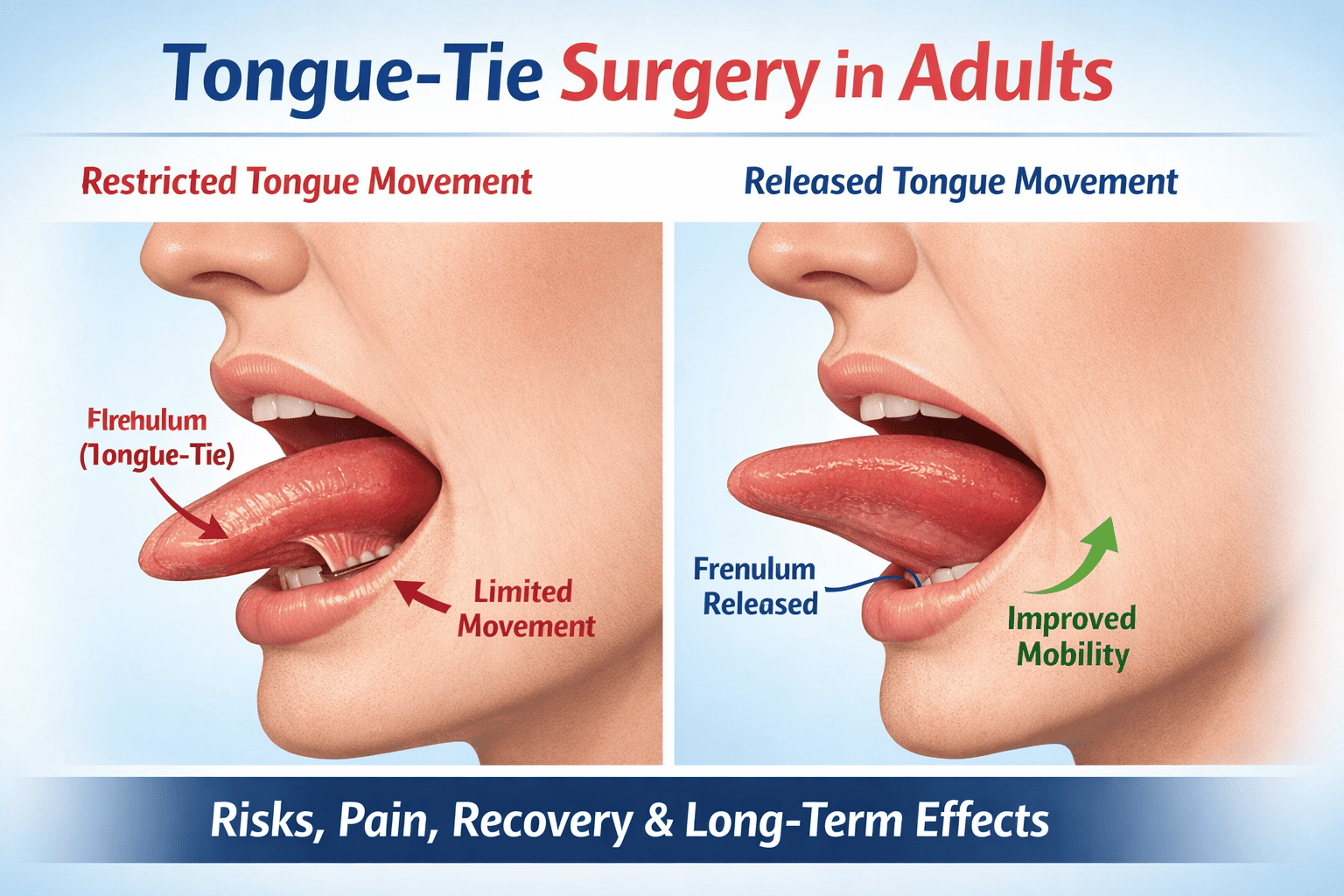

Tongue-tie surgery in adults commonly known as adult frenotomy or frenuloplasty has gained popularity in recent years. Many adults consider fixing tongue-tie to improve speech, swallowing, jaw tension, or oral mobility.Understand the real disadvantages of clipping tongue-tie in adults of clipping tongue-tie in adults, from recovery issues to scarring and surgical risks.
But an important question remains:
Is tongue-tie surgery safe for adults, and what are the real risks involved?
This article breaks down the pros and cons, pain level, recovery time, complications, and long-term effects of tongue-tie surgery in adults so you can make an informed decision.
Is Tongue-Tie Surgery Safe for Adults?
In general, tongue-tie surgery is considered medically safe when performed by an experienced professional. However, safe does not mean risk-free.
Adults face higher complication risks than infants because:
- The frenulum tissue is thicker
- Healing is slower
- Scar formation is more common
Safety largely depends on:
- Severity of tongue-tie
- Surgical technique used
- Post-surgery care and therapy
Does Tongue-Tie Surgery Hurt in Adults?
Yes adult tongue-tie surgery is usually painful, especially compared to infants.
Pain Levels Adults Commonly Report:
- Mild to moderate pain during first 3–5 days
- Burning or pulling sensation under the tongue
- Pain while talking, eating, or swallowing
Pain intensity depends on:
- Laser vs scalpel method
- Individual pain tolerance
- Presence of post-surgery exercises
Pain medication and ice packs are often required
disadvantages of clipping tongue-tie in adults Pros and Cons
✅ Potential Benefits
- Improved tongue mobility
- Reduced jaw or neck tension
- Better oral posture
- Easier swallowing in some cases
❌ Major Disadvantages
- Painful recovery
- Risk of infection and bleeding
- No guaranteed improvement
- Requires therapy after surgery
- Expensive and often not insured
For many adults, benefits are not automatic and require long-term effort.
What Happens After Tongue-Tie Release?
After surgery, adults usually experience:
Immediate Effects
- Swelling under the tongue
- Soreness and stiffness
- Difficulty speaking clearly
Short-Term Changes (1–2 weeks)
- Limited tongue movement
- White healing patch (normal)
- Increased saliva or dryness
Long-Term Expectations
- Tongue mobility improves slowly
- Therapy often required
- Results vary widely between individuals
Tongue-Tie Surgery Recovery Time in Adults
Recovery is longer in adults than children.
Typical Recovery Timeline:
- 3–7 days: Pain and swelling
- 2–3 weeks: Tissue healing
- 4–8 weeks: Functional improvement
- 3+ months: Final results (with therapy)
Skipping exercises can cause the tongue-tie to re-attach.
Should Adults Fix Tongue-Tie?
Adults should consider surgery only if tongue-tie causes real functional problems, such as:
- Speech difficulty
- Chronic jaw or neck pain
- Swallowing issues
- Dental or oral posture problems
If symptoms are mild or absent, surgery may do more harm than good.
Problems After Tongue-Tie Surgery in Adults
1. Bleeding After Tongue-Tie Surgery
Minor bleeding is common. In rare cases, excessive bleeding may require medical care.
2. Infection After Frenotomy
Poor oral hygiene can cause:
- Redness
- Swelling
- Fever
- Delayed healing
3. Scar Tissue After Tongue-Tie Release
Scar tissue may:
- Reduce tongue movement
- Cause tightness
- Lead to surgical failure
Adults are more prone to scarring than infants.
4. Limited Tongue Mobility After Surgery
Without therapy, some adults experience:
- Minimal improvement
- Regression after healing
- Persistent stiffness
5. Speech Issues After Frenotomy in Adults
Speech does not automatically improve. Speech therapy is often required.
6. Swallowing Problems
Some adults temporarily experience:
- Difficulty swallowing
- Gag reflex sensitivity
Adult Frenotomy Healing Process
Healing involves active participation:
- Daily tongue stretching exercises
- Myofunctional therapy
- Pain management
- Avoiding smoking or alcohol
Failure to follow aftercare can lead to tongue-tie surgery failure.
Tongue-Tie Surgery Risks in Adults
Common Risks:
- Pain and discomfort
- Swelling
- Bleeding
Less Common Risks:
- Infection
- Scar tissue
- Nerve irritation
Rare but Serious Risks:
- Permanent nerve damage
- Loss of tongue sensation
- Chronic pain
Long-Term Effects of Frenotomy in Adults
Long-term outcomes vary:
Possible Positive Effects:
- Improved oral mobility
- Reduced muscle tension
Possible Negative Effects:
- Chronic discomfort
- Scar tightness
- No symptom improvement
Some adults regret surgery due to high expectations and low results.
Adult Ankyloglossia Complications
Ankyloglossia (tongue-tie) surgery complications may include:
- Surgical failure
- Emotional stress
- Financial burden
- Need for repeat procedures
FAQ
What is the age limit for tongue-tie surgery?
There is no specific age limit for tongue-tie surgery. It can be done in infants, children, and even adults if symptoms cause functional problems.
What are the downsides of cutting tongue-tie?
Possible downsides include pain, bleeding, infection, and scar tissue formation. In adults, results are not always guaranteed and recovery can take longer.
Can adults get their tongue-tie snipped?
Yes, adults can have tongue-tie surgery, usually called adult frenotomy or frenuloplasty. However, adults often need therapy after surgery for best results.
How does a tongue-tie affect you as an adult?
In adults, tongue-tie may cause speech difficulty, jaw tension, swallowing issues, or oral discomfort. Some adults may have no symptoms at all.
Is it worth removing a tongue-tie as an adult?
It may be worth it if tongue-tie causes real daily problems, but not everyone benefits. Adults should weigh potential risks against expected improvement.
Can a tongue-tie cause problems later in life?
Yes, untreated tongue-tie can sometimes lead to speech issues, dental problems, or chronic muscle tension later in life. However, effects vary from person to person.
Final Verdict Is Adult Tongue-Tie Surgery Worth It?
Tongue-tie surgery in adults is not a guaranteed fix.
It can help some—but can also create new problems.
Surgery is best for adults who:
✔ Have severe symptoms
✔ Commit to therapy
✔ Understand the risks
Surgery may not be ideal if:
❌ Symptoms are mild
❌ Expectations are unrealistic
❌ Aftercare cannot be followed