
Subscribe

Back to blog Home Problems

Disadvantages of TongueTie Surgery in Adults Safety Pain Risks & Recovery Explained

Emily
February 01, 2026
No comments
disadvantages of clipping tongue-tie in adults

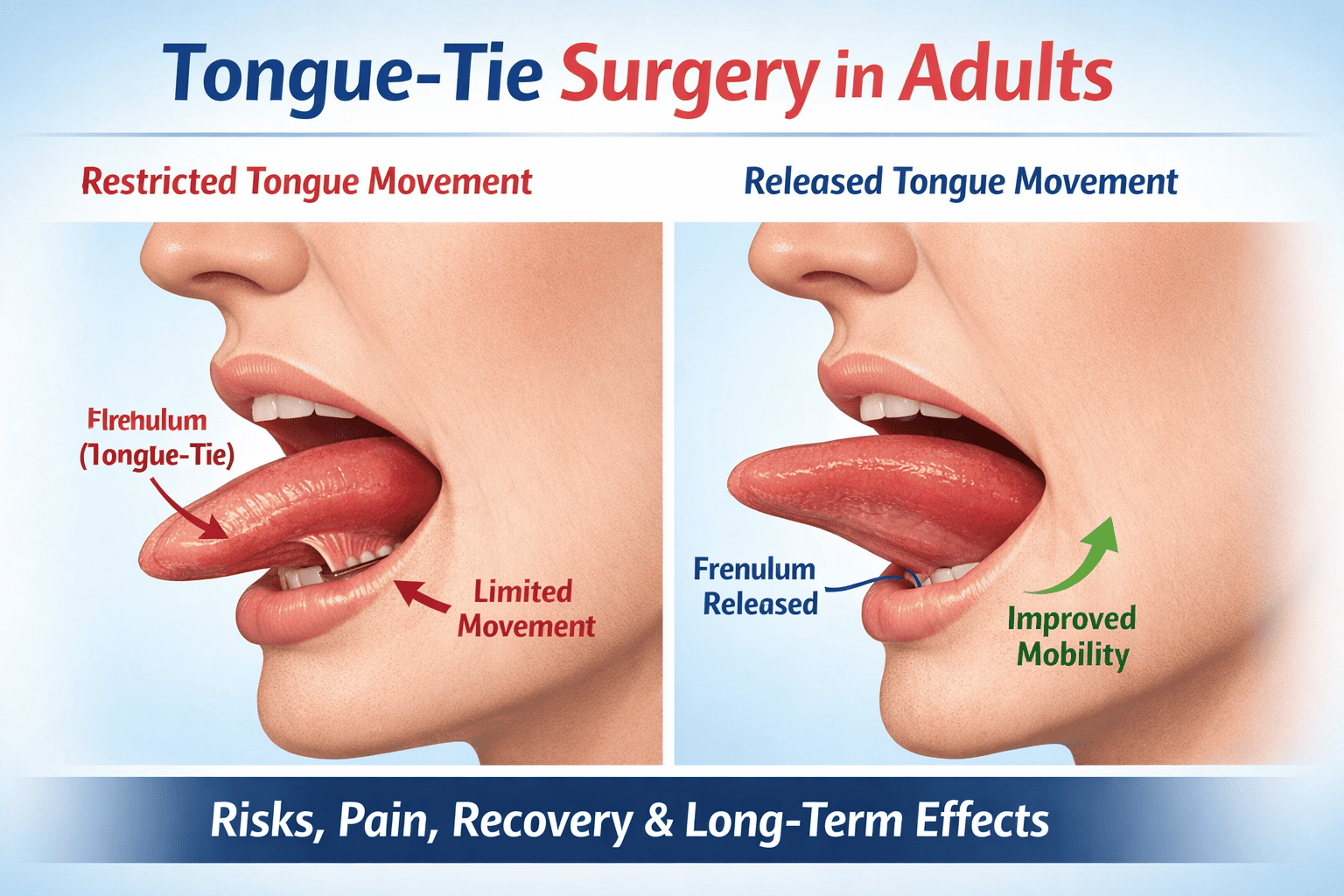
Tongue-tie surgery in adults commonly known as adult frenotomy or frenuloplasty has gained popularity in recent years. Many adults consider fixing tongue-tie to improve speech, swallowing, jaw tension, or oral mobility.Understand the real disadvantages of clipping tongue-tie in adults of clipping tongue-tie in adults, from recovery issues to scarring and surgical risks.

But an important question remains:
Is tongue-tie surgery safe for adults, and what are the real risks involved?

This article breaks down the pros and cons, pain level, recovery time, complications, and long-term effects of tongue-tie surgery in adults so you can make an informed decision.

Is Tongue-Tie Surgery Safe for Adults?

In general, tongue-tie surgery is considered medically safe when performed by an experienced professional. However, safe does not mean risk-free.

Adults face higher complication risks than infants because:

  • The frenulum tissue is thicker
  • Healing is slower
  • Scar formation is more common
You May Love  22 Ways to Clean Wooden Floors the Right Way

Safety largely depends on:

  • Severity of tongue-tie
  • Surgical technique used
  • Post-surgery care and therapy

Does Tongue-Tie Surgery Hurt in Adults?

Yes adult tongue-tie surgery is usually painful, especially compared to infants.

Pain Levels Adults Commonly Report:

  • Mild to moderate pain during first 3–5 days
  • Burning or pulling sensation under the tongue
  • Pain while talking, eating, or swallowing

Pain intensity depends on:

  • Laser vs scalpel method
  • Individual pain tolerance
  • Presence of post-surgery exercises

Pain medication and ice packs are often required

free cleaning planner

disadvantages of clipping tongue-tie in adults Pros and Cons

✅ Potential Benefits

  • Improved tongue mobility
  • Reduced jaw or neck tension
  • Better oral posture
  • Easier swallowing in some cases

❌ Major Disadvantages

  • Painful recovery
  • Risk of infection and bleeding
  • No guaranteed improvement
  • Requires therapy after surgery
  • Expensive and often not insured

For many adults, benefits are not automatic and require long-term effort.

What Happens After Tongue-Tie Release?

After surgery, adults usually experience:

Immediate Effects

  • Swelling under the tongue
  • Soreness and stiffness
  • Difficulty speaking clearly

Short-Term Changes (1–2 weeks)

  • Limited tongue movement
  • White healing patch (normal)
  • Increased saliva or dryness

Long-Term Expectations

  • Tongue mobility improves slowly
  • Therapy often required
  • Results vary widely between individuals

Tongue-Tie Surgery Recovery Time in Adults

Recovery is longer in adults than children.

Typical Recovery Timeline:

  • 3–7 days: Pain and swelling
  • 2–3 weeks: Tissue healing
  • 4–8 weeks: Functional improvement
  • 3+ months: Final results (with therapy)

Skipping exercises can cause the tongue-tie to re-attach.

Should Adults Fix Tongue-Tie?

Adults should consider surgery only if tongue-tie causes real functional problems, such as:

  • Speech difficulty
  • Chronic jaw or neck pain
  • Swallowing issues
  • Dental or oral posture problems
You May Love  Why Does My Fridge Smell Bad?

If symptoms are mild or absent, surgery may do more harm than good.

Problems After Tongue-Tie Surgery in Adults

1. Bleeding After Tongue-Tie Surgery

Minor bleeding is common. In rare cases, excessive bleeding may require medical care.

2. Infection After Frenotomy

Poor oral hygiene can cause:

  • Redness
  • Swelling
  • Fever
  • Delayed healing

3. Scar Tissue After Tongue-Tie Release

Scar tissue may:

  • Reduce tongue movement
  • Cause tightness
  • Lead to surgical failure

Adults are more prone to scarring than infants.

4. Limited Tongue Mobility After Surgery

Without therapy, some adults experience:

  • Minimal improvement
  • Regression after healing
  • Persistent stiffness

5. Speech Issues After Frenotomy in Adults

Speech does not automatically improve. Speech therapy is often required.

6. Swallowing Problems

Some adults temporarily experience:

  • Difficulty swallowing
  • Gag reflex sensitivity

Adult Frenotomy Healing Process

Healing involves active participation:

  • Daily tongue stretching exercises
  • Myofunctional therapy
  • Pain management
  • Avoiding smoking or alcohol

Failure to follow aftercare can lead to tongue-tie surgery failure.

Tongue-Tie Surgery Risks in Adults

Common Risks:

  • Pain and discomfort
  • Swelling
  • Bleeding

Less Common Risks:

  • Infection
  • Scar tissue
  • Nerve irritation

Rare but Serious Risks:

  • Permanent nerve damage
  • Loss of tongue sensation
  • Chronic pain

Long-Term Effects of Frenotomy in Adults

Long-term outcomes vary:

Possible Positive Effects:

  • Improved oral mobility
  • Reduced muscle tension

Possible Negative Effects:

  • Chronic discomfort
  • Scar tightness
  • No symptom improvement

Some adults regret surgery due to high expectations and low results.

Adult Ankyloglossia Complications

Ankyloglossia (tongue-tie) surgery complications may include:

  • Surgical failure
  • Emotional stress
  • Financial burden
  • Need for repeat procedures

FAQ

What is the age limit for tongue-tie surgery?

There is no specific age limit for tongue-tie surgery. It can be done in infants, children, and even adults if symptoms cause functional problems.

You May Love  27 Home Smell Hacks That Actually Work

What are the downsides of cutting tongue-tie?

Possible downsides include pain, bleeding, infection, and scar tissue formation. In adults, results are not always guaranteed and recovery can take longer.

Can adults get their tongue-tie snipped?

Yes, adults can have tongue-tie surgery, usually called adult frenotomy or frenuloplasty. However, adults often need therapy after surgery for best results.

How does a tongue-tie affect you as an adult?

In adults, tongue-tie may cause speech difficulty, jaw tension, swallowing issues, or oral discomfort. Some adults may have no symptoms at all.

Is it worth removing a tongue-tie as an adult?

It may be worth it if tongue-tie causes real daily problems, but not everyone benefits. Adults should weigh potential risks against expected improvement.

Can a tongue-tie cause problems later in life?

Yes, untreated tongue-tie can sometimes lead to speech issues, dental problems, or chronic muscle tension later in life. However, effects vary from person to person.

Final Verdict Is Adult Tongue-Tie Surgery Worth It?

Tongue-tie surgery in adults is not a guaranteed fix.
It can help some—but can also create new problems.

Surgery is best for adults who:

✔ Have severe symptoms
✔ Commit to therapy
✔ Understand the risks

Surgery may not be ideal if:

❌ Symptoms are mild
❌ Expectations are unrealistic
❌ Aftercare cannot be followed

Written By

Emily

Read full bio

Join the Inner Circle

Get exclusive DIY tips, free printables, and weekly inspiration delivered straight to your inbox. No spam, just love.

Your email address Subscribe
Unsubscribe at any time. * Replace this mock form with your preferred form plugin

Disadvantages of TongueTie Surgery in Adults Safety Pain Risks & Recovery Explained

February 1, 2026 disadvantages of clipping tongue-tie in adults

Tongue-tie surgery in adults commonly known as adult frenotomy or frenuloplasty has gained popularity in recent years. Many adults consider fixing tongue-tie to improve speech, swallowing, jaw tension, or oral mobility.Understand the real disadvantages of clipping tongue-tie in adults of clipping tongue-tie in adults, from recovery issues to scarring and surgical risks.

But an important question remains:
Is tongue-tie surgery safe for adults, and what are the real risks involved?

This article breaks down the pros and cons, pain level, recovery time, complications, and long-term effects of tongue-tie surgery in adults so you can make an informed decision.

Is Tongue-Tie Surgery Safe for Adults?

In general, tongue-tie surgery is considered medically safe when performed by an experienced professional. However, safe does not mean risk-free.

Adults face higher complication risks than infants because:

  • The frenulum tissue is thicker
  • Healing is slower
  • Scar formation is more common
You May Love  These 2 Trendy Paint Colors Will Instantly Warm Up Any Winter Space, According to Designers

Safety largely depends on:

  • Severity of tongue-tie
  • Surgical technique used
  • Post-surgery care and therapy

Does Tongue-Tie Surgery Hurt in Adults?

Yes adult tongue-tie surgery is usually painful, especially compared to infants.

Pain Levels Adults Commonly Report:

  • Mild to moderate pain during first 3–5 days
  • Burning or pulling sensation under the tongue
  • Pain while talking, eating, or swallowing

Pain intensity depends on:

  • Laser vs scalpel method
  • Individual pain tolerance
  • Presence of post-surgery exercises

Pain medication and ice packs are often required

free cleaning planner

disadvantages of clipping tongue-tie in adults Pros and Cons

✅ Potential Benefits

  • Improved tongue mobility
  • Reduced jaw or neck tension
  • Better oral posture
  • Easier swallowing in some cases

❌ Major Disadvantages

  • Painful recovery
  • Risk of infection and bleeding
  • No guaranteed improvement
  • Requires therapy after surgery
  • Expensive and often not insured

For many adults, benefits are not automatic and require long-term effort.

What Happens After Tongue-Tie Release?

After surgery, adults usually experience:

Immediate Effects

  • Swelling under the tongue
  • Soreness and stiffness
  • Difficulty speaking clearly

Short-Term Changes (1–2 weeks)

  • Limited tongue movement
  • White healing patch (normal)
  • Increased saliva or dryness

Long-Term Expectations

  • Tongue mobility improves slowly
  • Therapy often required
  • Results vary widely between individuals

Tongue-Tie Surgery Recovery Time in Adults

Recovery is longer in adults than children.

Typical Recovery Timeline:

  • 3–7 days: Pain and swelling
  • 2–3 weeks: Tissue healing
  • 4–8 weeks: Functional improvement
  • 3+ months: Final results (with therapy)

Skipping exercises can cause the tongue-tie to re-attach.

Should Adults Fix Tongue-Tie?

Adults should consider surgery only if tongue-tie causes real functional problems, such as:

  • Speech difficulty
  • Chronic jaw or neck pain
  • Swallowing issues
  • Dental or oral posture problems
You May Love  Why Your House Still Smells Even After Cleaning (And the Hidden Reasons Most Homeowners Miss)

If symptoms are mild or absent, surgery may do more harm than good.

Problems After Tongue-Tie Surgery in Adults

1. Bleeding After Tongue-Tie Surgery

Minor bleeding is common. In rare cases, excessive bleeding may require medical care.

2. Infection After Frenotomy

Poor oral hygiene can cause:

  • Redness
  • Swelling
  • Fever
  • Delayed healing

3. Scar Tissue After Tongue-Tie Release

Scar tissue may:

  • Reduce tongue movement
  • Cause tightness
  • Lead to surgical failure

Adults are more prone to scarring than infants.

4. Limited Tongue Mobility After Surgery

Without therapy, some adults experience:

  • Minimal improvement
  • Regression after healing
  • Persistent stiffness

5. Speech Issues After Frenotomy in Adults

Speech does not automatically improve. Speech therapy is often required.

6. Swallowing Problems

Some adults temporarily experience:

  • Difficulty swallowing
  • Gag reflex sensitivity

Adult Frenotomy Healing Process

Healing involves active participation:

  • Daily tongue stretching exercises
  • Myofunctional therapy
  • Pain management
  • Avoiding smoking or alcohol

Failure to follow aftercare can lead to tongue-tie surgery failure.

Tongue-Tie Surgery Risks in Adults

Common Risks:

  • Pain and discomfort
  • Swelling
  • Bleeding

Less Common Risks:

  • Infection
  • Scar tissue
  • Nerve irritation

Rare but Serious Risks:

  • Permanent nerve damage
  • Loss of tongue sensation
  • Chronic pain

Long-Term Effects of Frenotomy in Adults

Long-term outcomes vary:

Possible Positive Effects:

  • Improved oral mobility
  • Reduced muscle tension

Possible Negative Effects:

  • Chronic discomfort
  • Scar tightness
  • No symptom improvement

Some adults regret surgery due to high expectations and low results.

Adult Ankyloglossia Complications

Ankyloglossia (tongue-tie) surgery complications may include:

  • Surgical failure
  • Emotional stress
  • Financial burden
  • Need for repeat procedures

FAQ

What is the age limit for tongue-tie surgery?

There is no specific age limit for tongue-tie surgery. It can be done in infants, children, and even adults if symptoms cause functional problems.

You May Love  22 Ways to Clean Wooden Floors the Right Way

What are the downsides of cutting tongue-tie?

Possible downsides include pain, bleeding, infection, and scar tissue formation. In adults, results are not always guaranteed and recovery can take longer.

Can adults get their tongue-tie snipped?

Yes, adults can have tongue-tie surgery, usually called adult frenotomy or frenuloplasty. However, adults often need therapy after surgery for best results.

How does a tongue-tie affect you as an adult?

In adults, tongue-tie may cause speech difficulty, jaw tension, swallowing issues, or oral discomfort. Some adults may have no symptoms at all.

Is it worth removing a tongue-tie as an adult?

It may be worth it if tongue-tie causes real daily problems, but not everyone benefits. Adults should weigh potential risks against expected improvement.

Can a tongue-tie cause problems later in life?

Yes, untreated tongue-tie can sometimes lead to speech issues, dental problems, or chronic muscle tension later in life. However, effects vary from person to person.

Final Verdict Is Adult Tongue-Tie Surgery Worth It?

Tongue-tie surgery in adults is not a guaranteed fix.
It can help some—but can also create new problems.

Surgery is best for adults who:

✔ Have severe symptoms
✔ Commit to therapy
✔ Understand the risks

Surgery may not be ideal if:

❌ Symptoms are mild
❌ Expectations are unrealistic
❌ Aftercare cannot be followed

Related posts

Determined woman throws darts at target for concept of business success and achieving set goals

Leave a Comment