
Subscribe

Back to blog Kitchen & Bathroom

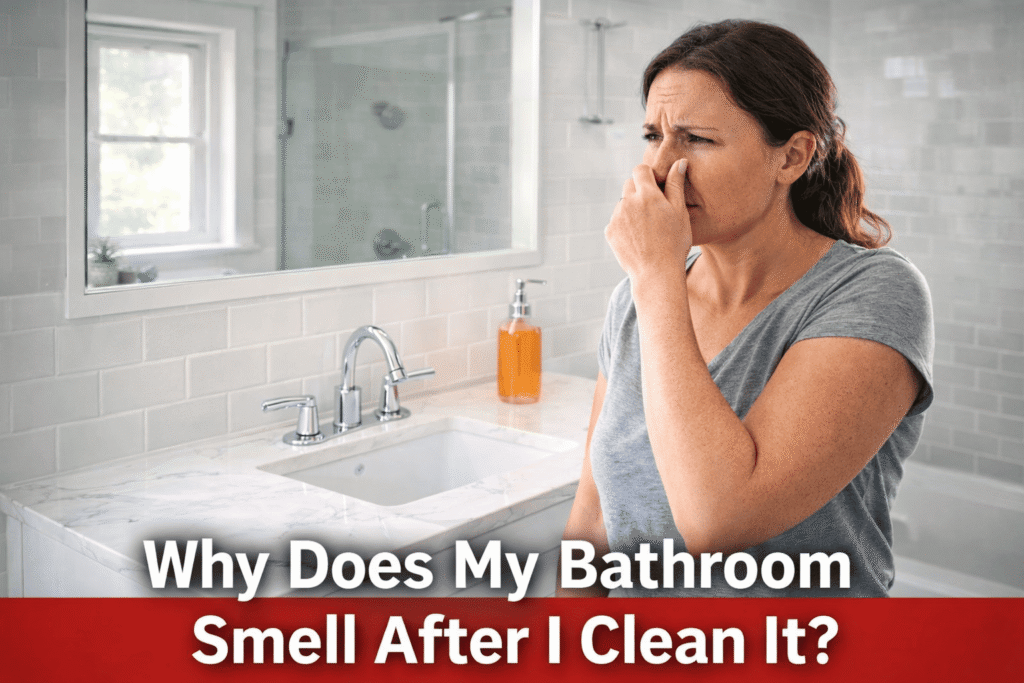
Why Does My Bathroom Smell After I Clean It?

Emily
March 07, 2026
No comments

You’ve just spent twenty minutes scrubbing the toilet, wiping down the counter, and spraying every surface with that lemon-fresh cleaner. You step back, toss the rag in the hamper, and take a deep breath expecting cleanliness.

Instead, you’re hit with a weird musty smell. Or worse that faint whiff of sewer or mildew that makes you wonder if you cleaned at all.

If this scenario plays out in your home, take a deep breath (maybe outside). You’re not losing your mind, and you’re definitely not alone. Bathrooms are the most challenging room in the house to keep fresh because they deal with moisture, bacteria, and plumbing issues daily. The good news? Once you understand why this happens, you can fix it for good.

Why This Happens: The Science of Bathroom Odors

Here’s the honest truth: Your bathroom can look sparkling clean and still smell funky because odors don’t live on visible surfaces.

Bathroom smells come from three main places:

  1. Bacteria and biofilm growing inside drains, pipes, and hidden damp spots
  2. Sewer gases escaping through dry traps or faulty plumbing
  3. Moisture issues creating mold and mildew in places you never see

When you clean, you’re usually tackling the surfaces the toilet bowl, the sink, the mirror. But if the smell is coming from inside the drain or behind the toilet, no amount of surface wiping will fix it.

Let’s track down exactly where those phantom smells are hiding.

Simple Fixes: Target the Real Source

Grab your cleaning supplies and let’s get tactical. Here are the most common hidden odor culprits and exactly how to banish them.

1. The Toilet (It’s Not What You Think)

You clean the bowl, but do you clean under the rim? Those little holes where water comes out during flushing collect urine, minerals, and bacteria over time. They basically become a petri dish dripping odor into your bowl every time you flush.

You May Love  15 Natural Ways to Clean Your Bathroom Safely

Fix it: Lift the toilet seat and use a small mirror and flashlight to look under the rim. You’ll probably see buildup. Use a curved toilet brush or an old toothbrush to scrub each hole. Then pour a cup of white vinegar into the overflow tube (the hole in the bottom of the tank) to kill bacteria inside the tank itself.

2. The Drains (Sink, Shower, and Floor)

Here’s a gross fact: drains aren’t just pipes they’re also homes for “biofilm.” That’s a slimy layer of bacteria, soap scum, hair, and products that builds up inside the pipe walls. It releases sulfur gases that smell like rotten eggs or sewage.

Fix it:

  • For sink drains: Remove the stopper if possible and scrub it. Pour 1/2 cup baking soda down the drain, followed by 1 cup white vinegar. Let it fizz for 15 minutes, then flush with boiling water.
  • For shower drains: Remove the cover and pull out any hair. Use a drain snake or zip-it tool to grab gunk deep in the pipe. Follow with the baking soda and vinegar treatment.
  • For floor drains: If you have a drain in your bathroom floor (common in older homes or basements), it might dry out. Pour water down it monthly to refill the trap.

3. The Washing Machine (Yes, Really)

If your bathroom contains your laundry, that front-load washer might be the culprit. The rubber gasket traps water and lint, growing black mildew that smells like dirty socks. That smell transfers to your towels, which then hang in your bathroom spreading the odor.

Fix it: Wipe the rubber gasket dry after each use. Leave the door open between loads. Run a monthly cleaning cycle with a washer cleaner or bleach. And never let wet towels sit in the machine overnight.

4. The Towels and Bath Mat

That musty smell might not be the room at all it could be your fabric. Damp towels and bath mats left crumpled on the floor are perfect breeding grounds for bacteria and mildew. Once they smell, they make your whole bathroom smell.

You May Love  15 Affordable Outdoor Jacuzzi Ideas That Look Expensive

Fix it: Hang towels to spread out and dry fully after each use. Wash bath mats weekly. Add a cup of white vinegar to the rinse cycle occasionally to kill odors. If towels smell sour even after washing, they need a deep clean wash them in hot water with vinegar, then again with regular detergent.

5. The Toilet Base and Floor

When you clean the toilet, do you clean around the base where it meets the floor? If not, urine can seep into that tiny gap and soak into the flooring or wax ring below. Over time, this creates a permanent urine smell that no surface cleaner can touch.

Fix it: Thoroughly clean the gap between the toilet base and floor using a small brush and disinfectant. If the smell persists, the wax ring might be failing that’s a job for a plumber.

6. The Exhaust Fan

Your bathroom fan is supposed to remove moisture and odors. But if it’s caked with dust, it’s just recirculating stale air. Worse, dust buildup on the fan motor can overheat and produce a burning smell.

Fix it: Remove the fan cover (it usually just clips off) and wash it in soapy water. Vacuum inside the fan housing with a brush attachment. Do this every few months.

7. Hidden Mold Behind Caulk and Grout

Peeling caulk or cracked grout creates tiny gaps where water seeps in and never dries out. Behind that seemingly clean surface, mold is throwing a party—and you’re smelling the aftermath.

Fix it: Inspect all caulk around the tub, shower, and sink. If you see black spots or gaps, remove the old caulk, dry the area completely, and apply fresh caulk. Re-grout any cracked areas in tile.

Mistakes People Make That Make Bathroom Odors Worse

Sometimes our best efforts backfire. Avoid these common pitfalls:

  • Using too much product: Excess cleaner leaves residue that actually traps bacteria and creates more smell over time. Less is more.
  • Closing the door immediately after showering: That trapped moisture has nowhere to go. Leave the door open (or at least the window) to let things dry out.
  • Spraying air fresheners only: You’re just adding chemical scent on top of bacteria smell. It’s like putting perfume on a dirty shirt. Remove the source first.
  • Ignoring the toilet tank: The tank can grow algae, mold, and bacteria. Lift the lid—if you see slime, drop in a tank cleaning tablet (not one that damages parts) or scrub it empty occasionally.
  • Using the same rag everywhere: Wiping the toilet with a rag, then using it on the sink? You’re just spreading bacteria. Use separate cloths or paper towels for different areas.
You May Love  21 Minimalist Kitchen Ideas for a Clean Look

For a complete refresh of your entire cleaning approach, check out our bathroom cleaning tips guide. And if you’re struggling with odors elsewhere in your home, our home smell solutions article covers every room.

Quick Prevention Tips Keep Your Bathroom Fresh Daily

The best smell is no smell at all. Build these habits into your routine:

  • Run the exhaust fan during showers and for 20-30 minutes afterward. This is non-negotiable for moisture control.
  • Squeegee the shower walls after each use to remove excess water. Less moisture = less mildew.
  • Keep a small spray bottle of vinegar and water in the bathroom. Spritz it in the shower after use to prevent mold growth.
  • Wash your bath mat weekly and hang it to dry between washes. Never leave it bunched up on the floor.
  • Take out the trash frequently, especially if it contains bathroom waste or feminine products.
  • Pour water down floor drains monthly if you have them, to keep the trap full and sewer gases blocked.
  • Deep clean one “hidden” area each week. This week the drains, next week the toilet tank, the week after the exhaust fan. Rotating prevents buildup.

For a sustainable plan that keeps your whole home fresh, establish a solid cleaning routine that includes these often-forgotten spots.

When to Call a Plumber

If you’ve done all of the above and that sewer smell lingers, you might have a bigger issue. Possible problems include:

  • A broken or deteriorating wax ring on the toilet
  • A cracked vent pipe
  • A dry P-trap in a floor drain
  • Sewer line issues

Don’t ignore persistent sewage smells they can indicate health hazards. A plumber can scope your pipes and identify the source quickly.

That frustrating moment when your bathroom smells worse after cleaning happens to the best of us. But now you know the secret: it’s almost never about how hard you scrubbed, and almost always about a hidden spot you haven’t found yet.

Start with the drains this week. Next week, tackle the toilet tank. Work through this list one by one, and you’ll finally experience what it feels like to walk into a bathroom that smells as clean as it looks.


Written By

Emily

Read full bio

Join the Inner Circle

Get exclusive DIY tips, free printables, and weekly inspiration delivered straight to your inbox. No spam, just love.

Your email address Subscribe
Unsubscribe at any time. * Replace this mock form with your preferred form plugin

Why Does My Bathroom Smell After I Clean It?

March 7, 2026

You’ve just spent twenty minutes scrubbing the toilet, wiping down the counter, and spraying every surface with that lemon-fresh cleaner. You step back, toss the rag in the hamper, and take a deep breath expecting cleanliness.

Instead, you’re hit with a weird musty smell. Or worse that faint whiff of sewer or mildew that makes you wonder if you cleaned at all.

If this scenario plays out in your home, take a deep breath (maybe outside). You’re not losing your mind, and you’re definitely not alone. Bathrooms are the most challenging room in the house to keep fresh because they deal with moisture, bacteria, and plumbing issues daily. The good news? Once you understand why this happens, you can fix it for good.

Why This Happens: The Science of Bathroom Odors

Here’s the honest truth: Your bathroom can look sparkling clean and still smell funky because odors don’t live on visible surfaces.

Bathroom smells come from three main places:

  1. Bacteria and biofilm growing inside drains, pipes, and hidden damp spots
  2. Sewer gases escaping through dry traps or faulty plumbing
  3. Moisture issues creating mold and mildew in places you never see

When you clean, you’re usually tackling the surfaces the toilet bowl, the sink, the mirror. But if the smell is coming from inside the drain or behind the toilet, no amount of surface wiping will fix it.

Let’s track down exactly where those phantom smells are hiding.

Simple Fixes: Target the Real Source

Grab your cleaning supplies and let’s get tactical. Here are the most common hidden odor culprits and exactly how to banish them.

1. The Toilet (It’s Not What You Think)

You clean the bowl, but do you clean under the rim? Those little holes where water comes out during flushing collect urine, minerals, and bacteria over time. They basically become a petri dish dripping odor into your bowl every time you flush.

You May Love  15 Affordable Outdoor Jacuzzi Ideas That Look Expensive

Fix it: Lift the toilet seat and use a small mirror and flashlight to look under the rim. You’ll probably see buildup. Use a curved toilet brush or an old toothbrush to scrub each hole. Then pour a cup of white vinegar into the overflow tube (the hole in the bottom of the tank) to kill bacteria inside the tank itself.

2. The Drains (Sink, Shower, and Floor)

Here’s a gross fact: drains aren’t just pipes they’re also homes for “biofilm.” That’s a slimy layer of bacteria, soap scum, hair, and products that builds up inside the pipe walls. It releases sulfur gases that smell like rotten eggs or sewage.

Fix it:

  • For sink drains: Remove the stopper if possible and scrub it. Pour 1/2 cup baking soda down the drain, followed by 1 cup white vinegar. Let it fizz for 15 minutes, then flush with boiling water.
  • For shower drains: Remove the cover and pull out any hair. Use a drain snake or zip-it tool to grab gunk deep in the pipe. Follow with the baking soda and vinegar treatment.
  • For floor drains: If you have a drain in your bathroom floor (common in older homes or basements), it might dry out. Pour water down it monthly to refill the trap.

3. The Washing Machine (Yes, Really)

If your bathroom contains your laundry, that front-load washer might be the culprit. The rubber gasket traps water and lint, growing black mildew that smells like dirty socks. That smell transfers to your towels, which then hang in your bathroom spreading the odor.

Fix it: Wipe the rubber gasket dry after each use. Leave the door open between loads. Run a monthly cleaning cycle with a washer cleaner or bleach. And never let wet towels sit in the machine overnight.

4. The Towels and Bath Mat

That musty smell might not be the room at all it could be your fabric. Damp towels and bath mats left crumpled on the floor are perfect breeding grounds for bacteria and mildew. Once they smell, they make your whole bathroom smell.

You May Love  14 Clean Scandinavian Kitchen Design Ideas

Fix it: Hang towels to spread out and dry fully after each use. Wash bath mats weekly. Add a cup of white vinegar to the rinse cycle occasionally to kill odors. If towels smell sour even after washing, they need a deep clean wash them in hot water with vinegar, then again with regular detergent.

5. The Toilet Base and Floor

When you clean the toilet, do you clean around the base where it meets the floor? If not, urine can seep into that tiny gap and soak into the flooring or wax ring below. Over time, this creates a permanent urine smell that no surface cleaner can touch.

Fix it: Thoroughly clean the gap between the toilet base and floor using a small brush and disinfectant. If the smell persists, the wax ring might be failing that’s a job for a plumber.

6. The Exhaust Fan

Your bathroom fan is supposed to remove moisture and odors. But if it’s caked with dust, it’s just recirculating stale air. Worse, dust buildup on the fan motor can overheat and produce a burning smell.

Fix it: Remove the fan cover (it usually just clips off) and wash it in soapy water. Vacuum inside the fan housing with a brush attachment. Do this every few months.

7. Hidden Mold Behind Caulk and Grout

Peeling caulk or cracked grout creates tiny gaps where water seeps in and never dries out. Behind that seemingly clean surface, mold is throwing a party—and you’re smelling the aftermath.

Fix it: Inspect all caulk around the tub, shower, and sink. If you see black spots or gaps, remove the old caulk, dry the area completely, and apply fresh caulk. Re-grout any cracked areas in tile.

Mistakes People Make That Make Bathroom Odors Worse

Sometimes our best efforts backfire. Avoid these common pitfalls:

  • Using too much product: Excess cleaner leaves residue that actually traps bacteria and creates more smell over time. Less is more.
  • Closing the door immediately after showering: That trapped moisture has nowhere to go. Leave the door open (or at least the window) to let things dry out.
  • Spraying air fresheners only: You’re just adding chemical scent on top of bacteria smell. It’s like putting perfume on a dirty shirt. Remove the source first.
  • Ignoring the toilet tank: The tank can grow algae, mold, and bacteria. Lift the lid—if you see slime, drop in a tank cleaning tablet (not one that damages parts) or scrub it empty occasionally.
  • Using the same rag everywhere: Wiping the toilet with a rag, then using it on the sink? You’re just spreading bacteria. Use separate cloths or paper towels for different areas.
You May Love  Clogged Bathroom Drain Solution Easy Fixes That Actually Work

For a complete refresh of your entire cleaning approach, check out our bathroom cleaning tips guide. And if you’re struggling with odors elsewhere in your home, our home smell solutions article covers every room.

Quick Prevention Tips Keep Your Bathroom Fresh Daily

The best smell is no smell at all. Build these habits into your routine:

  • Run the exhaust fan during showers and for 20-30 minutes afterward. This is non-negotiable for moisture control.
  • Squeegee the shower walls after each use to remove excess water. Less moisture = less mildew.
  • Keep a small spray bottle of vinegar and water in the bathroom. Spritz it in the shower after use to prevent mold growth.
  • Wash your bath mat weekly and hang it to dry between washes. Never leave it bunched up on the floor.
  • Take out the trash frequently, especially if it contains bathroom waste or feminine products.
  • Pour water down floor drains monthly if you have them, to keep the trap full and sewer gases blocked.
  • Deep clean one “hidden” area each week. This week the drains, next week the toilet tank, the week after the exhaust fan. Rotating prevents buildup.

For a sustainable plan that keeps your whole home fresh, establish a solid cleaning routine that includes these often-forgotten spots.

When to Call a Plumber

If you’ve done all of the above and that sewer smell lingers, you might have a bigger issue. Possible problems include:

  • A broken or deteriorating wax ring on the toilet
  • A cracked vent pipe
  • A dry P-trap in a floor drain
  • Sewer line issues

Don’t ignore persistent sewage smells they can indicate health hazards. A plumber can scope your pipes and identify the source quickly.

That frustrating moment when your bathroom smells worse after cleaning happens to the best of us. But now you know the secret: it’s almost never about how hard you scrubbed, and almost always about a hidden spot you haven’t found yet.

Start with the drains this week. Next week, tackle the toilet tank. Work through this list one by one, and you’ll finally experience what it feels like to walk into a bathroom that smells as clean as it looks.
Related posts

Determined woman throws darts at target for concept of business success and achieving set goals

Leave a Comment