
Subscribe

Back to blog Home Problems

6 Expert Tips to Make Your Radiator Work More Efficiently

Emily
February 24, 2026
No comments

[ad_1]

Main Points

  • Radiators allow you to control the heat with dials or wall thermostats.
  • If you don’t have access to a thermostat, you can use DIY methods like foil or blankets to control the temp.
  • Simple steps like bleeding radiators and clearing blockages can improve radiator performance.

You might find yourself sitting right next to it your radiator it’s heating season, or maybe you open a window—even in winter—because your A radiator makes a room very hot.

We asked heating and HVAC experts if you can really control a radiator’s heat output. Spoiler alert: you can, read more below. We also asked for their best tips for making radiator heating more efficient. After all, in historic houses and apartments, radiators are often located next to drafty windows.

Meet the Expert

  • Glenn Gault is the owner of Gault Heating & Cooling, based in Ohio and Pennsylvania.
  • Scott Levene is VP of Levco Oil, Propane, and HVAC in Connecticut.

Can You Control the Output of an Old Radiator?

Credit:

elenaleonova / Getty Images


Both old and new radiators can be controlled using the supply valve dial towards the bottom of the radiator

“If you have a valve on a radiator with numbers from one to five, or any other temperature markings, you can change the heat output of the radiator individually,” says Glenn Gault. Gault is the owner of Gault Heating & Cooling, an HVAC company serving parts of Ohio and Pennsylvania.

It is important to look for gradients or numbers on the radiator dial. This means that the temperature of the radiator can be raised or lowered.

If it doesn’t have these identifiers, it’s probably a lock shield valve, which controls the rate of flow of hot water into the radiator. Lockshield valves have a plastic or metal cap—the lock shield itself—that prevents accidental valve adjustment.

If the radiator does not have a dial, its heat output is adjusted by the main wall thermostat. The thermostat will simultaneously adjust all the radiators in the system.​

What If Your Landlord Can Control Your Building’s Heat?

Credit:

The Spruce / Sarah Crowley


If you don’t have access to a thermostat for your whole building, there are some DIY ways you can adjust the temperature in your room:

If the room is very hot, “you can cover the radiators with a blanket or thick curtain so that some of the heat is absorbed by the material,” says Gault.

CAUTIONS

Because radiator surfaces can reach 200°F, use a wool blanket, which is naturally fire resistant up to 600°F if you choose to cover your radiator.

If the room is too hot or too dry, you can too the bedroom window is broken.

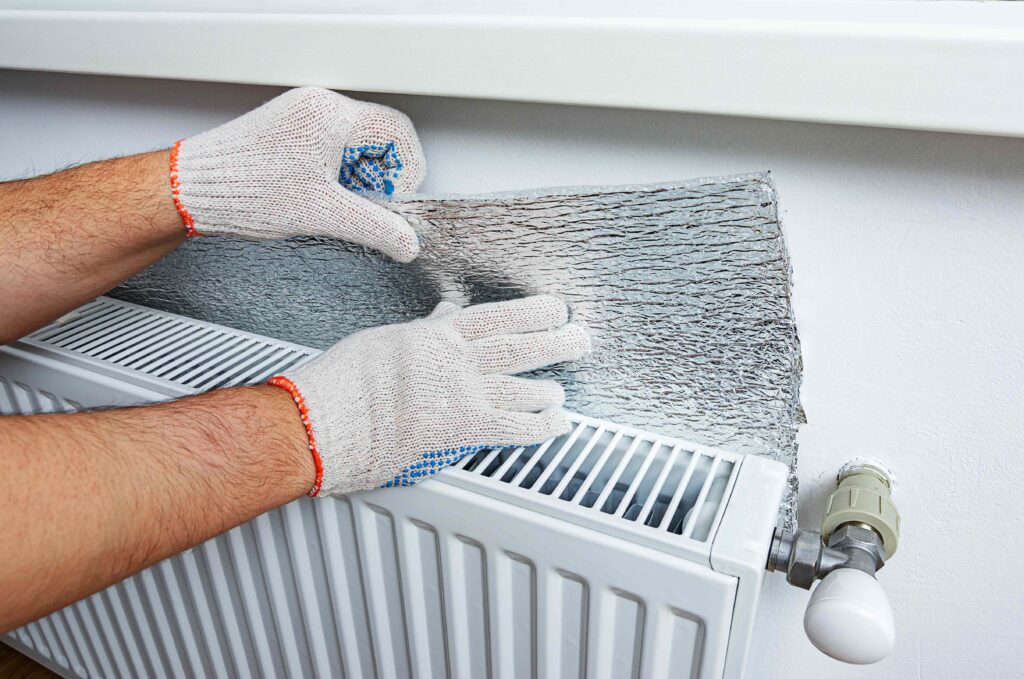
Too cold? “Placing reflective foil on the wall behind the radiator is another way to prevent heat from being absorbed by the wall, which encourages it to return to the room,” says Gault.

Tip

Valve vs vent: Steam radiators there is also a small metal hole on it, located at the top. Making sure you have the right size vent—these come in sizes #4, #5, #6, C, D, and #1—will ensure that the radiator is balanced and working properly. You can also buy adjustable vents for the radiator, even if you don’t directly adjust the room temperature with them.

How to Optimize Radiator Efficiency

  1. Bleeding optimizes a radiator by removing trapped air. Air is not as efficient as water or steam for storing and radiating heat.
  2. Also, removing barriers that block heat allows more heat to reach the room. Gault suggests moving furniture or curtains from in front of the radiator. “Radiators heat rooms by heating surfaces, not just the air,” Gault said. The more freely the heat can move, the better the room will be heated.
  3. With steam radiators, draining the boiler water removes sediment and improves the boiler’s ability to heat water.
  4. “I’ve also found that maintaining the correct boiler water temperature helps ensure that more heat goes into the room instead of the wall,” says Scott Levene. Levene is with Levco Oil, Propane, and HVAC, a heating services company located in Connecticut.
  5. Use DIY methods like putting a blanket over your radiator or putting foil on the back of the radiator.
  6. Remove nearby window drafts.

CAUTIONS

Radiators contain scalding hot water during heating. Do not plumb a radiator unless the boiler system is shut down.

It is best to leave the job to your building’s maintenance team, a professional plumber, or radiator specialist.

What To Do If Your Radiator Is Near A Drafty Window

Credit:

CynthiaAnnF / Getty Images


Radiators near drafty windows can cause problems, but only in some cases.

You’ll know a draft is a problem when you hear the draft or feel the cold air rushing around the window. Drafts capture heat before it circulates, making the radiator work harder for less charge.

Most newly installed windows are double or triple-glazed (two or three panes of glass). Single-glazed windows found in older homes allow more heat to escape and require special care. Large expanses of glass resist the radiator’s effort to heat the room.

For homeowners or renters, an easy method is to install a radiator shelf or windowsill deflector to direct more heat into the room.

Of course, “the first plan of action is seal any gaps to prevent cold air from overpowering the radiator output,” Levene said.

Prevent Window Drafts

Once the window is sealed, the radiator will heat the space more efficiently without requiring higher settings. Procedures for winter windows usually simple and inexpensive, from caulking windows to replacing blinds:

  • Use a draft stopper: Make a draft stopper by filling a long sock with rice and place it on the windowsill to block drafts.
  • Wash the cracks: Fill the cracks in the wall around the window wood filler or paintable caulk.
  • Caulking under the trim: Drafts coming from under the window trim Can be caulked, but you have to remove the trim first.
  • Add window film: Place the sheets on the transparent window film over the window with double-sided tape to create a thermal barrier.
  • Install cellular blinds: Replace blinds with cellular blinds with honeycombed interior to keep the warmth in the room.

[ad_2]

Source link

You May Love  Why Your House Still Smells Even After Cleaning (And the Hidden Reasons Most Homeowners Miss)
Written By

Emily

Read full bio

Join the Inner Circle

Get exclusive DIY tips, free printables, and weekly inspiration delivered straight to your inbox. No spam, just love.

Your email address Subscribe
Unsubscribe at any time. * Replace this mock form with your preferred form plugin

6 Expert Tips to Make Your Radiator Work More Efficiently

February 24, 2026

[ad_1]

Main Points

  • Radiators allow you to control the heat with dials or wall thermostats.
  • If you don’t have access to a thermostat, you can use DIY methods like foil or blankets to control the temp.
  • Simple steps like bleeding radiators and clearing blockages can improve radiator performance.

You might find yourself sitting right next to it your radiator it’s heating season, or maybe you open a window—even in winter—because your A radiator makes a room very hot.

We asked heating and HVAC experts if you can really control a radiator’s heat output. Spoiler alert: you can, read more below. We also asked for their best tips for making radiator heating more efficient. After all, in historic houses and apartments, radiators are often located next to drafty windows.

Meet the Expert

  • Glenn Gault is the owner of Gault Heating & Cooling, based in Ohio and Pennsylvania.
  • Scott Levene is VP of Levco Oil, Propane, and HVAC in Connecticut.

Can You Control the Output of an Old Radiator?

Credit:

elenaleonova / Getty Images


Both old and new radiators can be controlled using the supply valve dial towards the bottom of the radiator

“If you have a valve on a radiator with numbers from one to five, or any other temperature markings, you can change the heat output of the radiator individually,” says Glenn Gault. Gault is the owner of Gault Heating & Cooling, an HVAC company serving parts of Ohio and Pennsylvania.

It is important to look for gradients or numbers on the radiator dial. This means that the temperature of the radiator can be raised or lowered.

If it doesn’t have these identifiers, it’s probably a lock shield valve, which controls the rate of flow of hot water into the radiator. Lockshield valves have a plastic or metal cap—the lock shield itself—that prevents accidental valve adjustment.

If the radiator does not have a dial, its heat output is adjusted by the main wall thermostat. The thermostat will simultaneously adjust all the radiators in the system.​

What If Your Landlord Can Control Your Building’s Heat?

Credit:

The Spruce / Sarah Crowley


If you don’t have access to a thermostat for your whole building, there are some DIY ways you can adjust the temperature in your room:

If the room is very hot, “you can cover the radiators with a blanket or thick curtain so that some of the heat is absorbed by the material,” says Gault.

CAUTIONS

Because radiator surfaces can reach 200°F, use a wool blanket, which is naturally fire resistant up to 600°F if you choose to cover your radiator.

If the room is too hot or too dry, you can too the bedroom window is broken.

Too cold? “Placing reflective foil on the wall behind the radiator is another way to prevent heat from being absorbed by the wall, which encourages it to return to the room,” says Gault.

Tip

Valve vs vent: Steam radiators there is also a small metal hole on it, located at the top. Making sure you have the right size vent—these come in sizes #4, #5, #6, C, D, and #1—will ensure that the radiator is balanced and working properly. You can also buy adjustable vents for the radiator, even if you don’t directly adjust the room temperature with them.

How to Optimize Radiator Efficiency

  1. Bleeding optimizes a radiator by removing trapped air. Air is not as efficient as water or steam for storing and radiating heat.
  2. Also, removing barriers that block heat allows more heat to reach the room. Gault suggests moving furniture or curtains from in front of the radiator. “Radiators heat rooms by heating surfaces, not just the air,” Gault said. The more freely the heat can move, the better the room will be heated.
  3. With steam radiators, draining the boiler water removes sediment and improves the boiler’s ability to heat water.
  4. “I’ve also found that maintaining the correct boiler water temperature helps ensure that more heat goes into the room instead of the wall,” says Scott Levene. Levene is with Levco Oil, Propane, and HVAC, a heating services company located in Connecticut.
  5. Use DIY methods like putting a blanket over your radiator or putting foil on the back of the radiator.
  6. Remove nearby window drafts.

CAUTIONS

Radiators contain scalding hot water during heating. Do not plumb a radiator unless the boiler system is shut down.

It is best to leave the job to your building’s maintenance team, a professional plumber, or radiator specialist.

What To Do If Your Radiator Is Near A Drafty Window

Credit:

CynthiaAnnF / Getty Images


Radiators near drafty windows can cause problems, but only in some cases.

You’ll know a draft is a problem when you hear the draft or feel the cold air rushing around the window. Drafts capture heat before it circulates, making the radiator work harder for less charge.

Most newly installed windows are double or triple-glazed (two or three panes of glass). Single-glazed windows found in older homes allow more heat to escape and require special care. Large expanses of glass resist the radiator’s effort to heat the room.

For homeowners or renters, an easy method is to install a radiator shelf or windowsill deflector to direct more heat into the room.

Of course, “the first plan of action is seal any gaps to prevent cold air from overpowering the radiator output,” Levene said.

Prevent Window Drafts

Once the window is sealed, the radiator will heat the space more efficiently without requiring higher settings. Procedures for winter windows usually simple and inexpensive, from caulking windows to replacing blinds:

  • Use a draft stopper: Make a draft stopper by filling a long sock with rice and place it on the windowsill to block drafts.
  • Wash the cracks: Fill the cracks in the wall around the window wood filler or paintable caulk.
  • Caulking under the trim: Drafts coming from under the window trim Can be caulked, but you have to remove the trim first.
  • Add window film: Place the sheets on the transparent window film over the window with double-sided tape to create a thermal barrier.
  • Install cellular blinds: Replace blinds with cellular blinds with honeycombed interior to keep the warmth in the room.

[ad_2]

Source link

You May Love  house cleaning schedule printable free Stay Organized & Stress-Free!

Related posts

Determined woman throws darts at target for concept of business success and achieving set goals

Leave a Comment