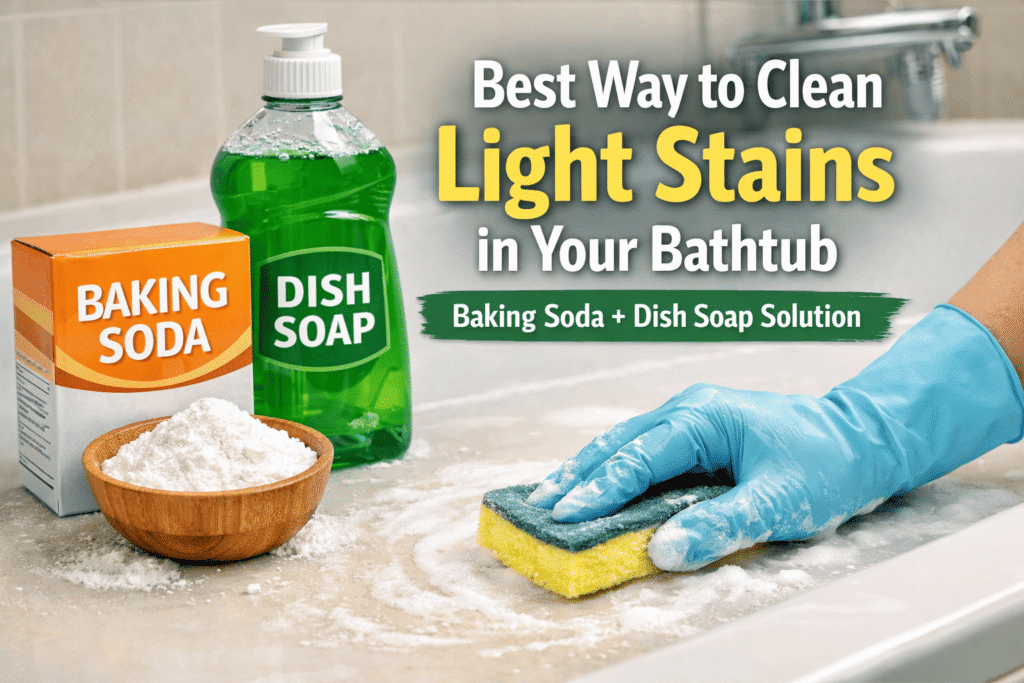


You cook three meals here. Maybe pack lunches, help with homework, pour morning coffee before the sun is fully up. By Wednesday night, the sink has that faint cloudy film. The stovetop feels sticky even though you wiped it. The microwave smells like last Tuesday. And somehow, no matter how many times you clean, the kitchen never quite looks the way it does in those magazine photos.
Here is the truth I have learned after years of testing and failing and testing again: most kitchen cleaning methods are outdated. We scrub because our mothers scrubbed. We spray and wipe and hope, but we rarely stop to ask if there is a smarter way. There is. These fifteen kitchen cleaning hacks are not theoretical. They are not repurposed life hacks from unreliable sources. They are real, tested, and ready to make your kitchen genuinely cleaner with noticeably less effort.
1. Steam Your Microwave With Citrus
Nobody enjoys scrubbing dried spaghetti sauce from microwave walls. The heat bakes food on, and abrasive scrubbers damage the interior surface over time.
Fill a microwave-safe bowl with one cup of water. Slice a lemon in half, squeeze the juice into the water, and drop the spent rinds in as well. Microwave on high for five minutes. Do not open the door immediately. Let the steam continue working for another two minutes. When you open the door, the interior walls are dripping with condensation, and every bit of baked-on food has softened completely. Wipe once with a damp cloth. The microwave is spotless, and the citrus scent lingers pleasantly.
2. The Aluminum Foil Sink Trick
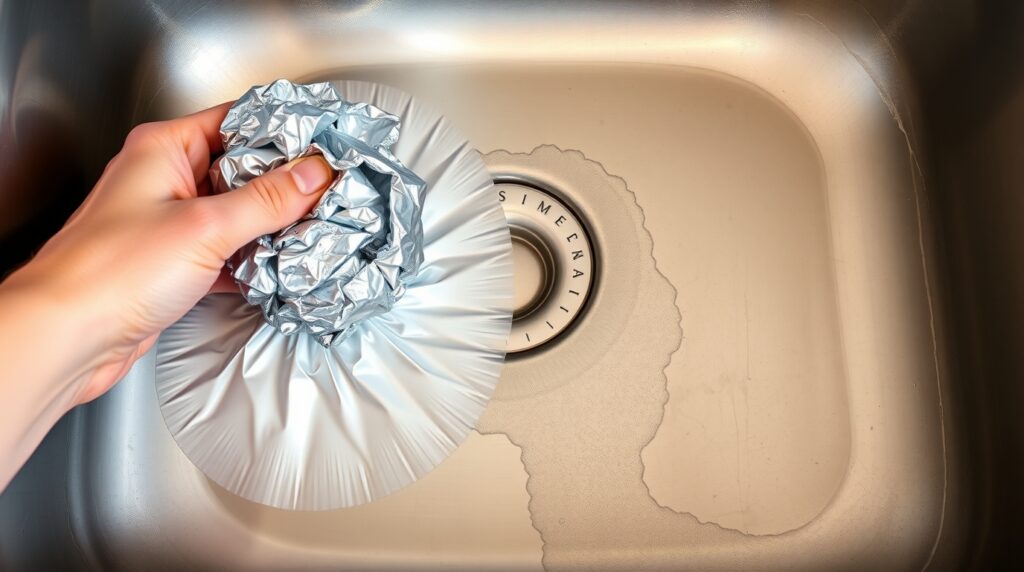
Stainless steel sinks develop dark scuff marks and cloudy water spots that regular dish soap cannot touch. You can buy specialized sink polish, but you already have something better in your kitchen drawer.
Crumple a sheet of aluminum foil into a loose ball. Run warm water over your sink. Scrub the stainless steel surface with the foil ball using circular motions. The foil is softer than steel wool but abrasive enough to lift mineral deposits and scuffs. Rinse thoroughly and dry with a soft cloth. Your sink will have a uniform, brushed sheen that looks professionally restored.
3. Revive Wooden Cutting Boards With Salt and Lemon
Wood cutting boards absorb odors, stains, and bacteria deep into the grain. Soap and water clean the surface, but they do not address what is embedded below.
Sprinkle coarse kosher salt generously across the entire board. Cut a lemon in half and rub the cut side firmly into the salt, working in circles. The salt acts as an abrasive scrubber. The lemon acid breaks down grease and neutralizes odors like onion and garlic. Let the paste sit for five minutes, then scrape everything into the trash and rinse the board with hot water. Do not soak wood. Dry immediately upright. The board looks lighter, smells fresh, and the surface is smooth again.
4. Remove Coffee and Tea Stains With Baking Soda
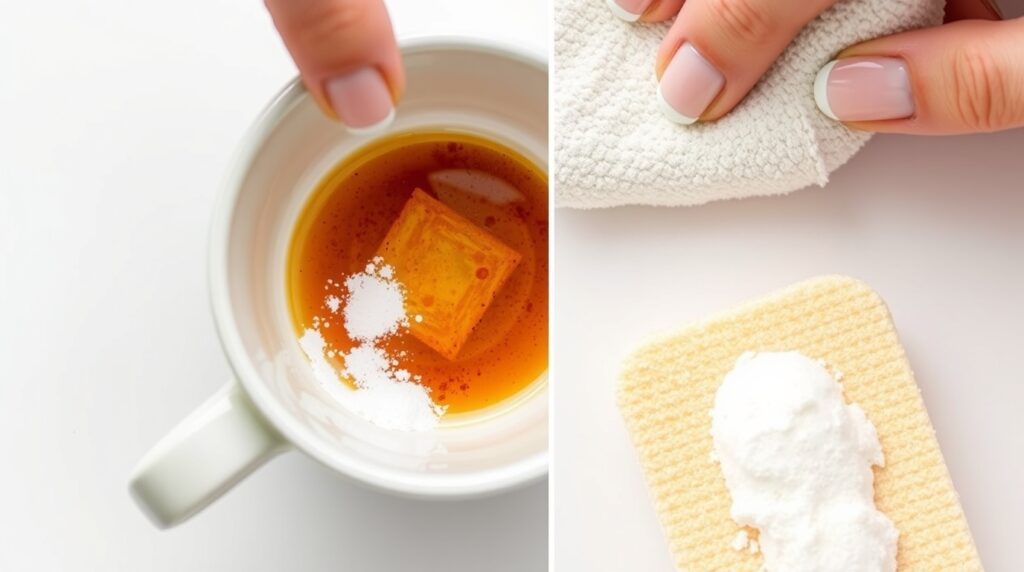
White ceramic mugs look terrible once brown rings form inside. Those stains are tannin deposits, and they bond to the porous ceramic surface. Bleach works but leaves a chemical smell and requires thorough rinsing.
Sprinkle one tablespoon of baking soda into the bottom of each stained mug. Add just enough water to form a thick paste. Rub the paste around the interior with your fingers or a soft sponge. The mild abrasion lifts tannins completely without scratching. Rinse and dry. Mugs look new again, and you did not use any harsh chemicals.
5. Degrease Cabinet Doors With Dish Soap and Vinegar
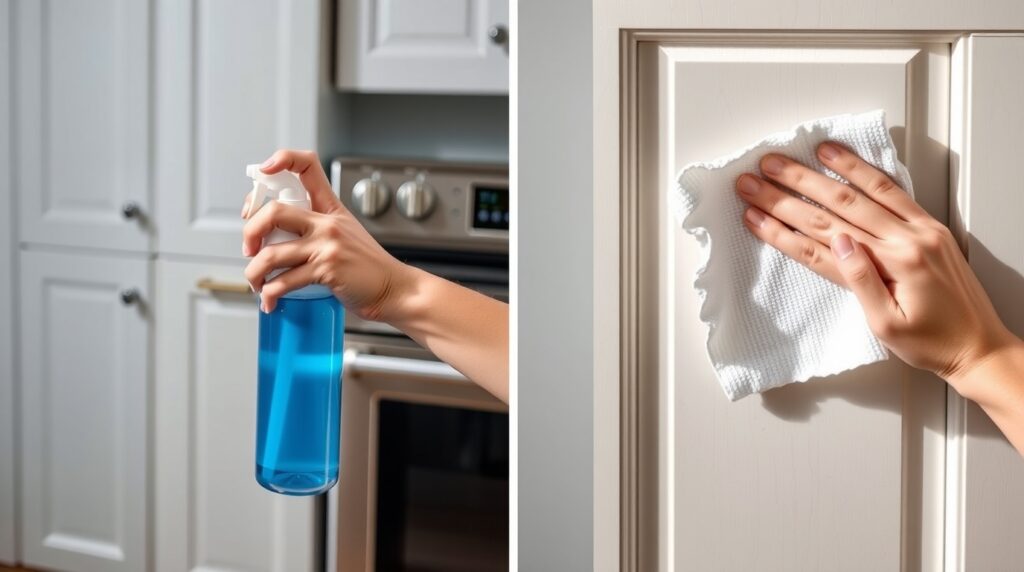
Kitchen cabinet doors develop a invisible sticky film, especially those near the stove. This is grease vapor that settled and oxidized. Water alone will not cut it. All-purpose cleaners often leave streaks or require excessive rubbing.
Fill a spray bottle with two cups warm water, one tablespoon blue Dawn dish soap, and one tablespoon white vinegar. Spray the cabinet doors generously and let the solution sit for three minutes. Wipe with a microfiber cloth. The soap breaks grease, the vinegar cuts through residue, and the cloth traps everything rather than pushing it around. Your fingers will slide smoothly across the wood instead of catching on tacky film.
6. Clean Blender Jars Without Disassembly
Smoothie residue clings to the bottom of blender jars and under the blade assembly. Taking the jar apart every time is tedious, and reaching the bottom with a sponge is awkward.
Fill the blender halfway with hot water. Add one drop of blue Dawn dish soap. Secure the lid and run the blender on high for thirty seconds. The spinning water scours every interior surface, including the crevices around the blade. Pour out the soapy water, rinse, and let the jar air dry upside down. Your blender is clean in less than one minute.
7. Restore Cloudy Glass Bakeware
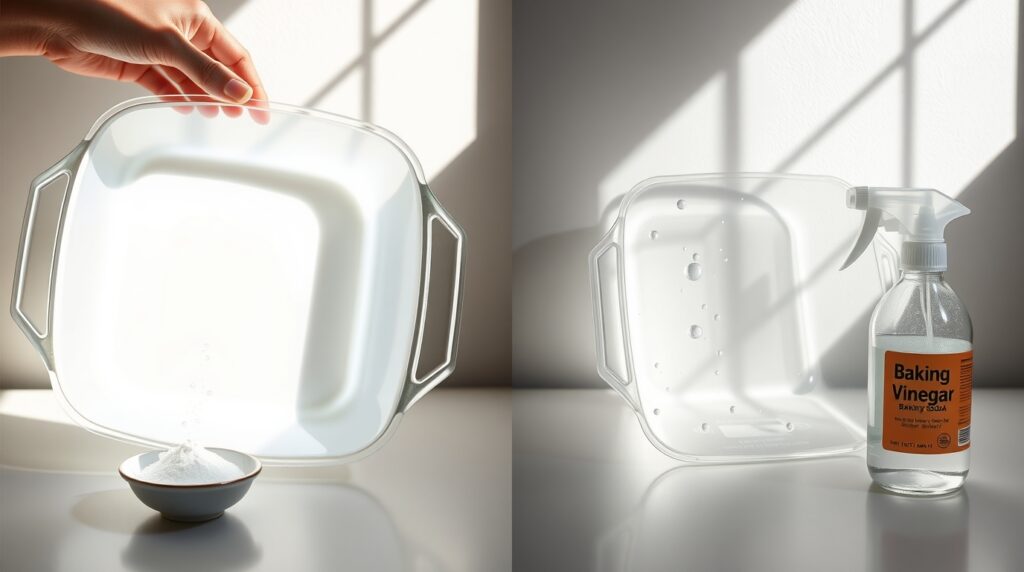
Pyrex and glass baking dishes gradually develop a white, cloudy film. This is mineral buildup from hard water and detergent residue baked on at high temperatures. Scrubbing barely helps.
Sprinkle baking soda over the cloudy areas. Spray white vinegar directly onto the baking soda. The fizzing reaction lifts mineral deposits from the glass surface. Let it bubble for ten minutes, then scrub gently with a non-abrasive sponge. Rinse and dry. The glass returns to its original crystal clarity.
8. The Dishwasher Tablet Trick for Oven Doors
Glass oven doors accumulate brown, baked-on splatter that resists standard cleaners. Commercial oven cleaners are caustic and require ventilation and gloves. You do not need them.
Wet the oven door glass. Rub a dry dishwasher tablet directly onto the glass in circular motions. The tablet contains enzymes and abrasives designed to break down baked food. It works on oven residue exactly the same way. Wipe clean with a damp cloth. The brown film lifts away almost immediately.
9. Garbage Disposal Refresh With Ice and Salt
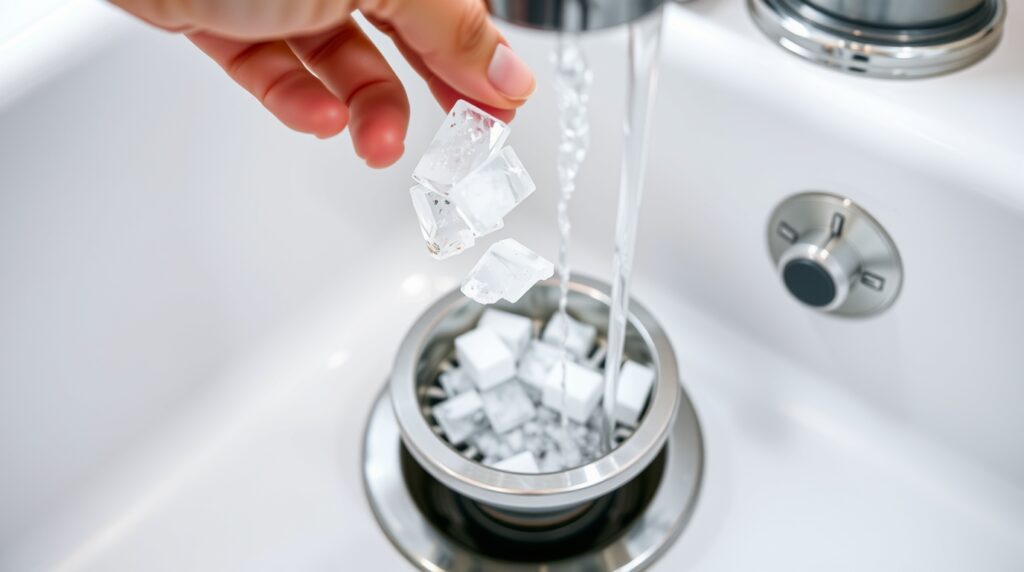
Garbage disposals develop odor from trapped food particles lodged under the rubber splash guard and in the grinding mechanism. Liquid drain cleaners are ineffective and environmentally questionable.
Drop one cup of ice cubes into the disposal. Add one cup of coarse rock salt. Run cold water and turn on the disposal. The ice scours the interior walls and blades, while the salt provides abrasion and has mild antibacterial properties. Follow with lemon or orange peels for fresh scent. Your disposal will grind more efficiently and smell neutral.
10. Stovetop Grime Dissolved With Dryer Sheets
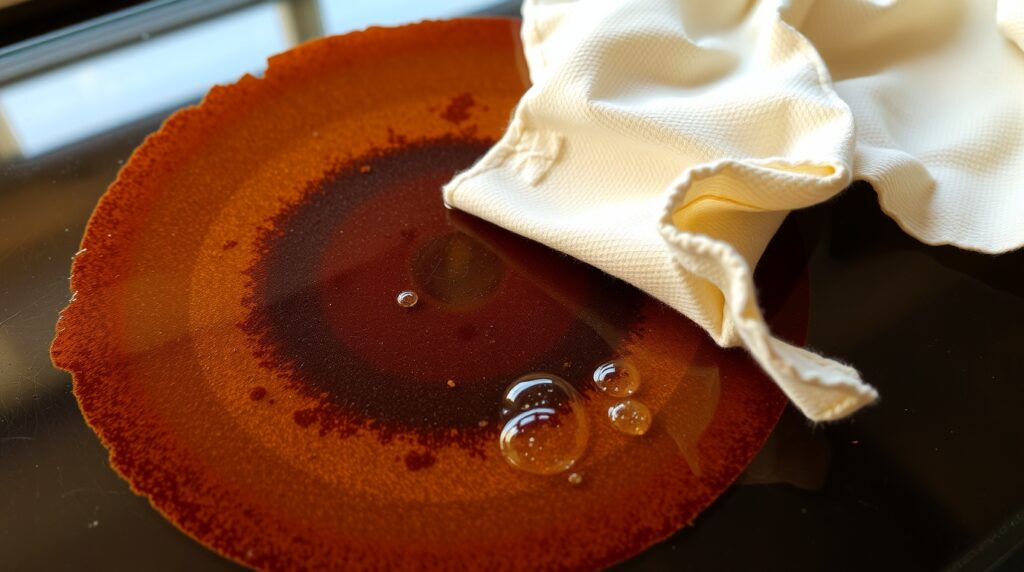
Electric coil and glass cooktops collect cooked-on spills that seem permanently bonded. You scrub, and your arm tires, but the stain remains.
Place a used dryer sheet over the cooled, stained area. Soak it with warm water and let it sit for twenty minutes. The fabric softener residue contains surfactants that break down cooked grease. Wipe away the sheet and the loosened debris. For stubborn spots, a second application usually finishes the job.
11. Bread for Broken Glass
Tiny glass shards from a broken drinking glass or dish are nearly impossible to see and even harder to pick up safely. A broom pushes them around. Your fingers are not safe.
Press a slice of soft white bread gently against the floor where the glass broke. The bread acts like a sponge, capturing even microscopic slivers in its porous surface. Dispose of the bread immediately in a sealed bag. Repeat with fresh slices until no shards remain. This method is faster and significantly safer than sweeping or vacuuming alone.
12. Rice for Hard-to-Reach Jar Bottoms
Narrow vases, water bottles, and baby bottles develop residue at the bottom where no sponge can reach. Your arm is too short, and bottle brushes often miss the very bottom.
Add one tablespoon of dry, uncooked rice to the container. Pour in warm water and a drop of dish soap. Swirl vigorously. The rice grains bounce against the glass, scrubbing the bottom and sides mechanically. Rinse thoroughly. The container is clean without specialty tools.
13. Non-Skid Drawer Liner as Shelf Liner
Cabinet shelves accumulate crumbs and sticky drips that harden over time. Paper shelf liners shift and tear. Adhesive liners leave residue when removed.
Cut non-skid drawer liner to fit your cabinet shelves. It grips the surface without adhesive and prevents dishes and cans from sliding. When it becomes dirty, lift it out, wash it in the sink with dish soap, dry it completely, and lay it back down. No scraping, no sticky residue, no replacement cost.
14. Shine Stainless Steel Appliances With Olive Oil
Stainless steel shows every fingerprint and smudge. Commercial stainless cleaners work but are expensive and often contain solvents that irritate sensitive skin.
Apply a tiny drop of olive oil to a soft, dry microfiber cloth. Buff the stainless steel surface in the direction of the grain, not against it. The oil fills microscopic scratches, repels future fingerprints, and leaves a warm, even sheen. Use literally one drop—excess oil attracts dust. Your refrigerator and dishwasher will look professionally detailed.
15. The Baking Soda Overnight Soak for Burnt Pans
Every cook has done it. You walk away for two minutes, and your favorite stainless steel pan has a blackened layer of burnt food cemented to the bottom. Scratching at it with metal tools damages the pan.
Cover the bottom of the pan with a thick layer of baking soda. Add enough water to form a paste, plus one inch of standing water. Bring the pan to a boil on the stovetop, then turn off the heat and let it sit overnight. In the morning, the burnt layer slides off under running water with minimal assistance from a soft sponge. No scraping, no steel wool, no ruined cookware.
Common Mistakes That Keep Kitchens Dirty
Using Dish Soap on Cast Iron
Dish soap strips the seasoned layer from cast iron skillets. This seasoning is what makes cast iron naturally non-stick. Wash cast iron with hot water and a stiff brush only. Dry immediately on a warm burner and rub with a thin layer of neutral oil before storing.
Spraying Cleaner Directly on Electronics
Kitchen appliances with digital displays and control panels should never be sprayed directly. Liquid seeps behind the protective cover and damages internal components. Spray your microfiber cloth first, then wipe the surface. The cloth should be damp, not wet.
Ignoring the Refrigerator Coils
Your refrigerator works harder and consumes more electricity when dust coats the condenser coils. The coils are underneath or behind the unit. Vacuum them with a brush attachment every six months. This simple task extends appliance life and reduces dust throughout your kitchen.
Overloading the Dishwasher
Stacking dishes too closely prevents water and detergent from reaching all surfaces. You rewash items by hand, defeating the purpose of the machine. Leave space between plates and angle items downward so water drains completely.
Natural Solutions That Actually Work
White Vinegar in the Coffee Maker
Mineral scale builds inside coffee makers and affects brewing temperature and flavor. Run a full cycle with equal parts white vinegar and water. Follow with two cycles of plain water. Your coffee will taste cleaner and brew at the correct temperature.
Lemon Juice for Cutting Board Stains
For stubborn stains on light-colored cutting boards, spread lemon juice across the surface and place the board in direct sunlight for several hours. Sunlight naturally bleaches organic stains, and lemon juice accelerates the process.
Baking soda and Essential Oil Deodorizer
Mix one cup baking soda with fifteen drops of lemon or orange essential oil. Sprinkle this mixture at the bottom of your kitchen trash can before inserting a new liner. It absorbs odors continuously without synthetic fragrances.
Small Changes, Cleaner Kitchen
You do not need a drawer full of single-purpose gadgets or expensive cleaning subscriptions. You need better information and the confidence to use what you already own. A lemon, some baking soda, a forgotten dryer sheet—these are not substitutes for real cleaning products. They are the real cleaning products.
Start with the microwave citrus steam tonight. Tomorrow, try the aluminum foil on your sink. By the end of the week, you will have tested five of these methods, and your kitchen will look and feel different. Not because you worked harder, but because you worked smarter.
That is the quiet satisfaction of a well-run home. Not perfection. Just small, consistent wins that add up to something real. You have fifteen of them now. Go use them.