
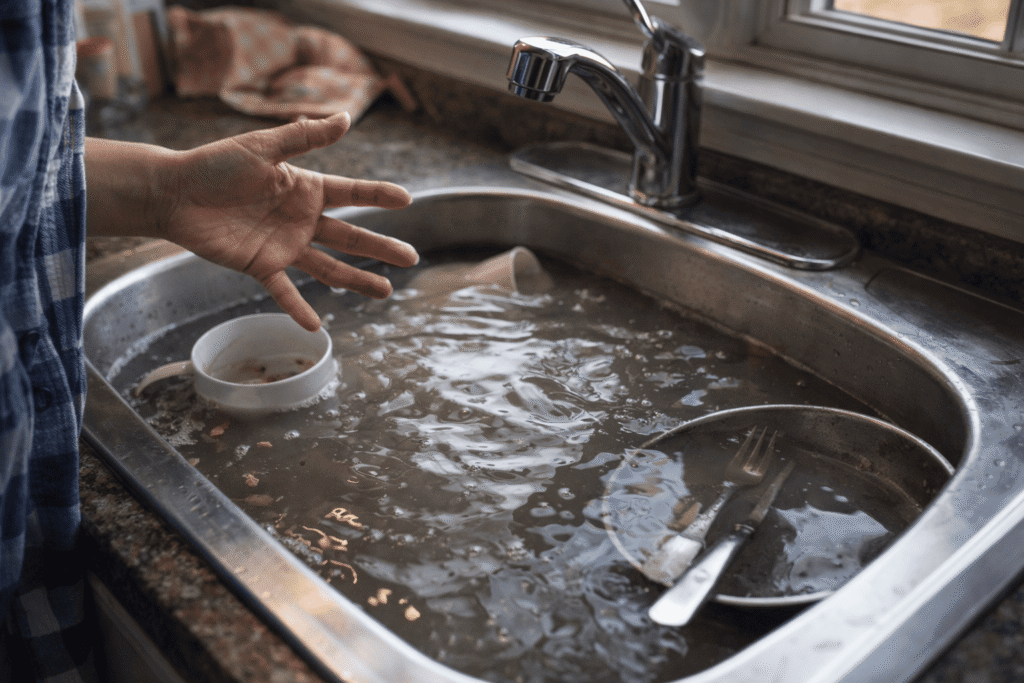
You are standing at the kitchen sink, rinsing a coffee mug. The water starts to rise. It swirls lazily around the dishes and just… sits there. You watch the sudsy water creep higher and higher, and you find yourself willing it to go down.
It is frustrating. It is slightly gross. And if you ignore it, that standing water will eventually turn into a smelly, stagnant mess.
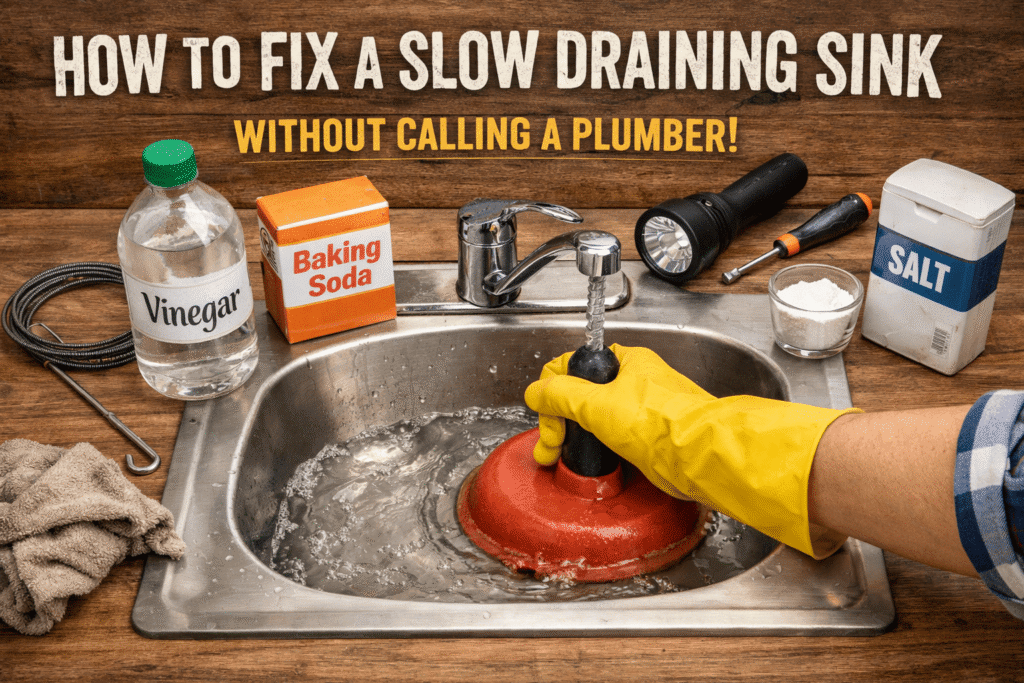
Before you reach for a bottle of toxic chemicals or start searching for plumber numbers, take a deep breath. In most cases, how to fix a slow draining sink is a simple DIY project that takes about 15 minutes. You probably have the tools you need sitting under your sink or in your pantry right now.
Let’s get your water flowing again.
The Spruce – How to Clean a Garbage Disposal
Why This Happens: The Usual Suspects
A sink doesn’t just decide to get clogged for no reason. There is always a culprit. Understanding why the water is moving slow helps you pick the right fix the first time.
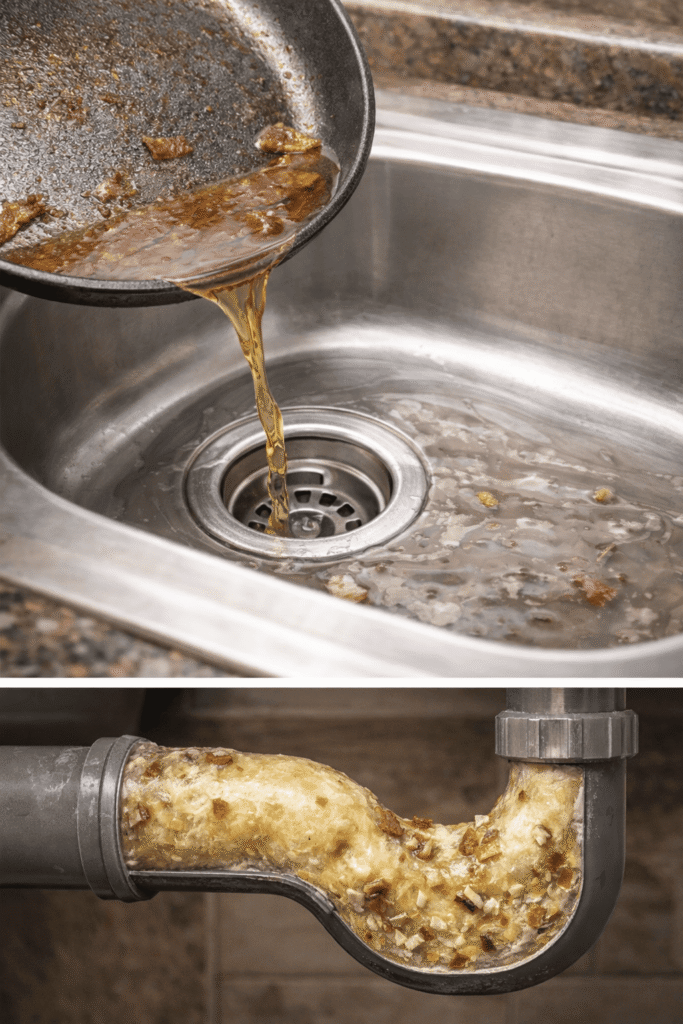
In the kitchen, the problem is almost always grease and food. When you wash greasy pans, the fat goes down the drain as a liquid. But as it travels through the cold pipes, it solidifies. It sticks to the inside of the pipe like candle wax. Bits of food then get trapped in that sticky layer, and slowly, the opening gets smaller and smaller.
In the bathroom, the enemy is you. Specifically, your hair and soap. Soap scum is sticky. When hair wraps around the drain stopper or gets caught in the pipes, the soap scum coats it. This creates a net that catches toothpaste grit and dead skin cells. Over time, that net becomes a solid blockage.
Hidden Causes Most People Ignore
Sometimes, the clog isn’t where you think it is. If the standard fixes aren’t working, consider these hidden issues:
- The Stopper Mechanism: In bathroom sinks, the pop-up stopper is a magnet for hair. People often pour liquids down the drain, not realizing the gunk is actually caught on top of the stopper assembly, not deep in the pipe.
- The Overflow Opening: That little hole near the rim of the bathroom sink? It can get slimy and clogged, which restricts airflow and actually slows the drain.
- The Vent Pipe: If you hear a gurgling sound when the water drains, you might have a venting issue. Air needs to get behind the water for it to flow freely. If your house’s plumbing vent on the roof is blocked by leaves or a bird’s nest, your sink will drain slowly even if the pipes are clean.
Step-by-Step Fix: How to Clear That Sink
Let’s get to work. Try these methods in order. Start with the simplest one; you might be surprised how often it works.
Step 1: The Boiling Water Flush (Kitchen Only)
If your sink is made of porcelain or metal, this is a great first step.
- Boil a large pot of water.
- If your sink is draining a little, pour the water directly down the drain in two or three stages, allowing the hot water to work between pours.
- Note: Do not do this if you have a garbage disposal running. Also, avoid this if you have PVC pipes, as extreme heat can soften the glue joints over time. For PVC, use very hot tap water instead.
Step 2: The Baking Soda and Vinegar Duo
This is my favorite method because it’s natural and fizzes up to break down organic matter (like grease and soap scum).
- Remove any standing water from the sink as best you can.
- Pour about 1/2 cup of baking soda down the drain. Use a spoon to push it down the hole.
- Follow immediately with 1 cup of white vinegar.
- Immediately cover the drain opening with a damp cloth or the sink plug. The reaction creates carbon dioxide gas, and covering it forces the pressure down into the pipe instead of up into your face.
- Wait 15–20 minutes. You’ll hear it fizzing and working.
- Flush with hot water.
Step 3: The Drain Snake (or Zip-It Tool)
For bathroom sinks, this is the ultimate solution.
- Remove the sink stopper. Most pop-up stoppers lift out or have a rod under the sink you can unhook.
- Buy a cheap plastic “Zip-It” tool from the hardware store. It looks like a long plastic strip with barbs on it.
- Shove it down the drain, twist, and pull up.
- Be prepared for a disgusting “hair-snake” to come out. Throw it directly in the trash.
- Repeat until nothing else comes up.
Step 4: Clean the P-Trap
If the water is still slow, the clog is likely in the curved pipe under the sink.
- Place a bucket directly under the pipes.
- Unscrew the slip nuts (the plastic rings that hold the curved section of pipe) by hand or with pliers (gently!).
- Remove the curved “P” shaped pipe.
- Dump the contents into the bucket. Use a wire or bottle brush to scrub the inside of the pipe clean.
- Reattach the pipe and hand-tighten the nuts. Don’t overtighten, or you’ll crack the plastic.
Common Mistakes That Make It Worse
When you are trying to figure out how to fix a slow draining sink, avoiding these pitfalls is just as important as the steps above.
- Using Liquid Draino as a First Resort: Those chemical cleaners generate heat to “melt” clogs. If they don’t work, that dangerous chemical soup is now sitting in your pipes. It becomes a hazard for you to work on, and it can actually eat away at older metal pipes or damage the rubber gaskets.
- Over-Tightening the Pipes: When you put the trap back together, hand-tight is usually enough. If you crank it with a wrench, you will crack the nut. Then you have a leak and a slow drain.
- Ignoring the Garbage Disposal: If your kitchen sink has a disposal, the clog might be in the disposal housing itself. Never stick your hand in there. Use the hex wrench that came with the unit (or an Allen wrench) to manually spin the flywheel from the bottom of the unit to free up a jam.
Prevention Tips Keeping It Fast
Once you have fixed the flow, you want to keep it that way. Here is how to maintain a fast-draining sink for months to come.
- Use a Strainer: Buy a simple mesh strainer for the kitchen and a hair catcher for the bathroom. They cost $5 and are the best defense against clogs.
- Grease Goes in the Trash: Never pour bacon grease or cooking oil down the drain. Wipe greasy pans with a paper towel before washing them.
- Monthly Maintenance: Once a month, pour that baking soda and vinegar down the drain followed by hot water. It keeps the biofilm from building up.
- Cold Water for Disposals: When using the garbage disposal, always run cold water. This solidifies any grease so the disposal blades can chop it up and push it through. Hot water keeps grease liquid, allowing it to settle deeper in the pipes.
When to Call a Professional
DIY has its limits. If you have tried the snake and cleaned the P-trap, but the water is still pooling, you might have a bigger issue deeper in the main line.
You should call a licensed plumber if:
- Multiple fixtures are slow: If your sink and your toilet are backing up, the clog is likely in the main sewer line leaving your house.
- You hear gurgling: If you hear bubbling sounds when the water drains, it suggests a venting problem or a deep blockage.
- Water backs up in other places: If running the washing machine causes water to bubble up in your shower drain, you have a serious blockage that requires professional equipment.
Consumer Reports – Best Drain Cleaners
Frequently Asked Questions
How do I unclog a slow draining sink?
Pour a mixture of baking soda and vinegar down the drain, let it fizz for 15 minutes, then flush with hot water. For hair clogs, use a plastic drain snake tool to physically remove the blockage.
What do plumbers recommend for slow drains?
Most plumbers recommend mechanical cleaning with a hand auger or snake rather than chemical drain cleaners. They also suggest using enzyme-based drain cleaners monthly to maintain clear pipes without damaging them.
Why is my drain slow but not clogged?
You likely have buildup inside the pipes that restricts water flow but doesn’t block it completely, often from grease coating the walls or soap scum accumulation. Another possibility is a partially blocked vent pipe on your roof restricting airflow.
What is the strongest thing to unclog a sink?
A professional-grade drain snake or auger is physically the strongest and most effective tool for removing tough clogs. For chemical options, a lye-based drain opener is strongest but should be used as a last resort since it generates intense heat and can damage pipes if misused.
Pro Tip: Before trying any harsh chemicals, remove and clean the P-trap under your sink—this alone fixes over 50% of slow drains and costs nothing but a few minutes of your time.