
Subscribe

Back to blog Home Problems

Why Does My House Smell Even After Cleaning?

Emily
March 07, 2026
No comments
Why does my house smell even after cleaning

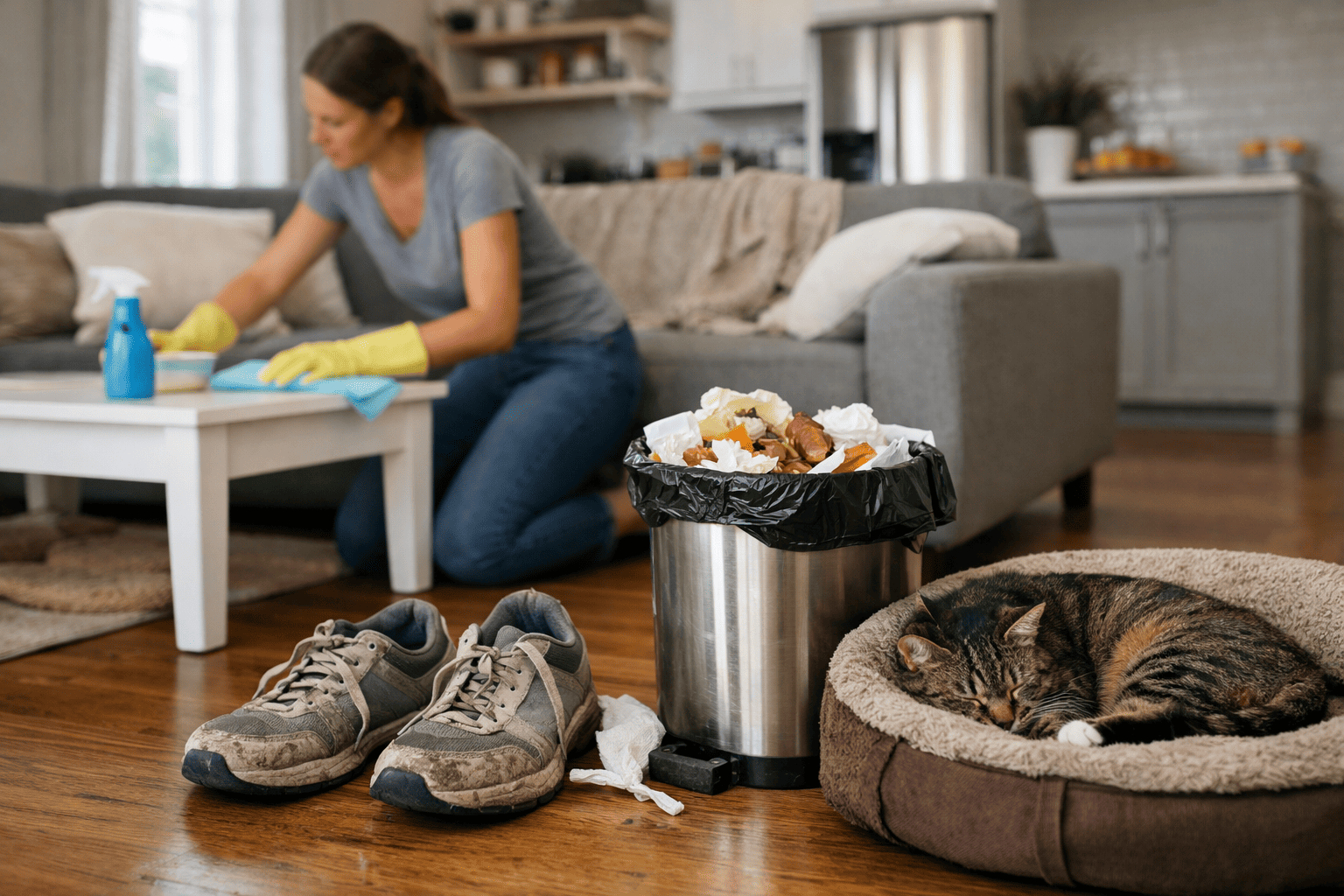
You just spent your Saturday morning scrubbing, dusting, and mopping. The counters gleam, the floors shine, and everything looks spotless. You lean back feeling accomplished only to catch a whiff of something funky an hour later. Sound familiar?

It’s one of the most frustrating mysteries for homeowners: the house looks clean, but it doesn’t smell clean. That lingering stale, sour, or musty odor makes all your hard work feel invisible. You’re not imagining things, and you’re certainly not alone. The good news? There’s a logical reason this happens and even better news? You can fix it 

Why This Happens The Hidden Truth About “Clean”

Here’s the thing most cleaning routines miss: Smells don’t come from what you can see. They come from what’s left behind .

When you clean, you’re usually focused on visible dirt. But odors are caused by microscopic culprits bacteria, biofilm, skin oils, food residue, and moisture that get embedded into your home’s surfaces. Traditional cleaning methods often just wipe or spray these contaminants around rather than removing them entirely .

Over time, these residues build up in layers. Your floors, carpets, upholstery, and even grout become odor sponges. Then, when humidity rises or your HVAC kicks on, those trapped smells get reactivated and released back into your air .

You May Love  22 Ways to Clean Wooden Floors the Right Way

The result? A house that’s surface-clean but fundamentally not fresh.

Simple Fixes: Track Down the Culprits Room by Room

Let’s play detective. Grab your flashlight and follow your nose here’s where those mystery smells are probably hiding.

1. Floors and Carpets (The Biggest Offenders)

Your floors take a beating. Dirt, oils from bare feet, pet dander, and cleaning product residue all settle into carpets and grout lines. If you mop without rinsing or extraction, you’re just redistributing dirty water .

Fix it: For hard floors, use a microfiber mop and change your water frequently. For carpets, sprinkle baking soda liberally, let it sit for a few hours (overnight is even better), then vacuum thoroughly. This absorbs trapped odors .

2. Your Garbage Disposal

That disposal seems self-cleaning, right? Wrong. Food particles cling to the rubber splash guard and grind chamber, creating a bacterial biofilm that smells like last week’s dinner .

Fix it: Lift the rubber guard and scrub its underside weekly with an old toothbrush and dish soap. Grind ice cubes and rock salt to scour the chamber, followed by citrus peels for freshness. For deeper cleaning, pour baking soda and vinegar down the drain, let it fizz for 15 minutes, then flush with boiling water .

3. The Dishwasher Filter

Here’s a shocker: if you’ve never cleaned your dishwasher filter, there’s likely a swamp of old food sitting at the bottom of your machine, cycling odors through your kitchen every time you run it .

Fix it: Locate the filter (usually in the bottom of the tub), twist it out, and rinse it under hot water while scrubbing with a brush. Do this monthly—or weekly if you run the dishwasher daily .

4. Washing Machine and Laundry

That musty smell might be coming from your washer itself. Front-loaders especially trap moisture in the rubber gasket, breeding mildew. Leaving wet clothes sitting in the machine for hours also creates a sour smell that transfers to your “clean” laundry .

You May Love  house cleaning schedule printable free Stay Organized & Stress-Free!

Fix it: Leave the washer door open between uses to dry out. Run a monthly cleaning cycle with hot water and bleach or a washer cleaner. And never let wet laundry sit overnight .

5. Hidden Moisture Spots

Mold and mildew don’t need a flood to grow—just humidity. Check under sinks, around toilet bases, behind the fridge, and in basement corners. Even a tiny damp spot can create a persistent musty odor .

Fix it: Use a dehumidifier in damp areas, especially basements. Fix leaky pipes promptly. Run bathroom fans during and after showers for at least 20 minutes .

6. HVAC System and Filters

If your home smells stale overall, your heating and cooling system might be circulating the problem. Dirty filters and dusty ducts trap odors and blow them through every room .

Fix it: Replace HVAC filters every 1-3 months. Vacuum vent covers regularly. If the smell persists, consider professional duct cleaning .

7. Upholstery, Curtains, and Bedding

Soft fabrics are odor magnets. Curtains in the kitchen absorb grease. Couches trap pet dander and spilled snacks. Sheets soak up sweat and body oils .

Fix it: Wash curtains at least once a year (check care labels). Vacuum upholstery monthly, and consider using a fabric refresher spray (a DIY mix of water, rubbing alcohol, and a few drops of essential oil works wonders). Wash bedding weekly .

Mistakes People Make That Make Odors Worse

Sometimes our well-intentioned habits backfire. Avoid these common pitfalls:

  • Masking instead of removing: Sprays, plug-ins, and candles don’t eliminate smells—they just cover them temporarily. The odor returns stronger once the scent fades, and you’ve added more chemical residue to the mix .
  • Using too much cleaner: More product doesn’t mean cleaner. Excess cleaner leaves behind sticky residue that traps dirt and bacteria, creating a film that actually feeds odors .
  • Neglecting your cleaning tools: A dirty vacuum with a full bag or a smelly sponge spreads germs and odors everywhere you “clean.” Replace sponges weekly and sanitize vacuum filters .
  • Forgetting hidden drains: Sink and floor drains have P-traps that hold water to block sewer gases. If a drain isn’t used regularly, the water evaporates, and those gases escape into your home .
You May Love  18 Easy Ways to Get Rid of Flies in Your Home

Quick Prevention Tips: Habits That Keep Your Home Fresh

The secret to a consistently good-smelling home isn’t more cleaning it’s smarter cleaning. Build these simple habits into your routine:

  • Run water in unused drains monthly to keep P-traps filled and block sewer gas .
  • Open windows daily, even just for 10 minutes. Fresh air is the best natural deodorizer .
  • Use exhaust fans while cooking and showering, and leave them on for 20-30 minutes afterward .
  • Place bowls of baking soda in odor-prone areas like closets, near litter boxes, and in the fridge .
  • Wash pet bedding weekly and bathe pets regularly .
  • Take out trash daily, especially if it contains food scraps .

For a deeper dive into keeping every room fresh, check out our complete bathroom cleaning tips and learn how to establish a sustainable cleaning routine that tackles hidden odor sources before they start.

When to Call in the Pros

If you’ve tried everything and that musty smell won’t budge, it might be time for professional help. Persistent odors can signal hidden mold inside walls, under flooring, or in your HVAC system. Professional cleaners have industrial-grade equipment that extracts deeply embedded contaminants—far beyond what surface cleaning can reach .

Final Thoughts

That frustrating smell after cleaning isn’t a sign you’re failing at housework. It’s just your home telling you that odor sources run deeper than surface dirt. The good news? Now you know exactly where to look and what to do about it.

Start with one or two of these fixes this week. Your nose and everyone who walks through your front door will thank you.

Want more home smell solutions that actually work? Explore our library of cleaning guides and transform your home from “looks clean” to truly fresh.

Written By

Emily

Read full bio

Join the Inner Circle

Get exclusive DIY tips, free printables, and weekly inspiration delivered straight to your inbox. No spam, just love.

Your email address Subscribe
Unsubscribe at any time. * Replace this mock form with your preferred form plugin

Why Does My House Smell Even After Cleaning?

March 7, 2026 Why does my house smell even after cleaning

You just spent your Saturday morning scrubbing, dusting, and mopping. The counters gleam, the floors shine, and everything looks spotless. You lean back feeling accomplished only to catch a whiff of something funky an hour later. Sound familiar?

It’s one of the most frustrating mysteries for homeowners: the house looks clean, but it doesn’t smell clean. That lingering stale, sour, or musty odor makes all your hard work feel invisible. You’re not imagining things, and you’re certainly not alone. The good news? There’s a logical reason this happens and even better news? You can fix it 

Why This Happens The Hidden Truth About “Clean”

Here’s the thing most cleaning routines miss: Smells don’t come from what you can see. They come from what’s left behind .

When you clean, you’re usually focused on visible dirt. But odors are caused by microscopic culprits bacteria, biofilm, skin oils, food residue, and moisture that get embedded into your home’s surfaces. Traditional cleaning methods often just wipe or spray these contaminants around rather than removing them entirely .

Over time, these residues build up in layers. Your floors, carpets, upholstery, and even grout become odor sponges. Then, when humidity rises or your HVAC kicks on, those trapped smells get reactivated and released back into your air .

You May Love  6 Expert Tips to Make Your Radiator Work More Efficiently

The result? A house that’s surface-clean but fundamentally not fresh.

Simple Fixes: Track Down the Culprits Room by Room

Let’s play detective. Grab your flashlight and follow your nose here’s where those mystery smells are probably hiding.

1. Floors and Carpets (The Biggest Offenders)

Your floors take a beating. Dirt, oils from bare feet, pet dander, and cleaning product residue all settle into carpets and grout lines. If you mop without rinsing or extraction, you’re just redistributing dirty water .

Fix it: For hard floors, use a microfiber mop and change your water frequently. For carpets, sprinkle baking soda liberally, let it sit for a few hours (overnight is even better), then vacuum thoroughly. This absorbs trapped odors .

2. Your Garbage Disposal

That disposal seems self-cleaning, right? Wrong. Food particles cling to the rubber splash guard and grind chamber, creating a bacterial biofilm that smells like last week’s dinner .

Fix it: Lift the rubber guard and scrub its underside weekly with an old toothbrush and dish soap. Grind ice cubes and rock salt to scour the chamber, followed by citrus peels for freshness. For deeper cleaning, pour baking soda and vinegar down the drain, let it fizz for 15 minutes, then flush with boiling water .

3. The Dishwasher Filter

Here’s a shocker: if you’ve never cleaned your dishwasher filter, there’s likely a swamp of old food sitting at the bottom of your machine, cycling odors through your kitchen every time you run it .

Fix it: Locate the filter (usually in the bottom of the tub), twist it out, and rinse it under hot water while scrubbing with a brush. Do this monthly—or weekly if you run the dishwasher daily .

4. Washing Machine and Laundry

That musty smell might be coming from your washer itself. Front-loaders especially trap moisture in the rubber gasket, breeding mildew. Leaving wet clothes sitting in the machine for hours also creates a sour smell that transfers to your “clean” laundry .

You May Love  house cleaning schedule printable free Stay Organized & Stress-Free!

Fix it: Leave the washer door open between uses to dry out. Run a monthly cleaning cycle with hot water and bleach or a washer cleaner. And never let wet laundry sit overnight .

5. Hidden Moisture Spots

Mold and mildew don’t need a flood to grow—just humidity. Check under sinks, around toilet bases, behind the fridge, and in basement corners. Even a tiny damp spot can create a persistent musty odor .

Fix it: Use a dehumidifier in damp areas, especially basements. Fix leaky pipes promptly. Run bathroom fans during and after showers for at least 20 minutes .

6. HVAC System and Filters

If your home smells stale overall, your heating and cooling system might be circulating the problem. Dirty filters and dusty ducts trap odors and blow them through every room .

Fix it: Replace HVAC filters every 1-3 months. Vacuum vent covers regularly. If the smell persists, consider professional duct cleaning .

7. Upholstery, Curtains, and Bedding

Soft fabrics are odor magnets. Curtains in the kitchen absorb grease. Couches trap pet dander and spilled snacks. Sheets soak up sweat and body oils .

Fix it: Wash curtains at least once a year (check care labels). Vacuum upholstery monthly, and consider using a fabric refresher spray (a DIY mix of water, rubbing alcohol, and a few drops of essential oil works wonders). Wash bedding weekly .

Mistakes People Make That Make Odors Worse

Sometimes our well-intentioned habits backfire. Avoid these common pitfalls:

  • Masking instead of removing: Sprays, plug-ins, and candles don’t eliminate smells—they just cover them temporarily. The odor returns stronger once the scent fades, and you’ve added more chemical residue to the mix .
  • Using too much cleaner: More product doesn’t mean cleaner. Excess cleaner leaves behind sticky residue that traps dirt and bacteria, creating a film that actually feeds odors .
  • Neglecting your cleaning tools: A dirty vacuum with a full bag or a smelly sponge spreads germs and odors everywhere you “clean.” Replace sponges weekly and sanitize vacuum filters .
  • Forgetting hidden drains: Sink and floor drains have P-traps that hold water to block sewer gases. If a drain isn’t used regularly, the water evaporates, and those gases escape into your home .
You May Love  25 Bathroom Cleaning Hacks That Actually Work

Quick Prevention Tips: Habits That Keep Your Home Fresh

The secret to a consistently good-smelling home isn’t more cleaning it’s smarter cleaning. Build these simple habits into your routine:

  • Run water in unused drains monthly to keep P-traps filled and block sewer gas .
  • Open windows daily, even just for 10 minutes. Fresh air is the best natural deodorizer .
  • Use exhaust fans while cooking and showering, and leave them on for 20-30 minutes afterward .
  • Place bowls of baking soda in odor-prone areas like closets, near litter boxes, and in the fridge .
  • Wash pet bedding weekly and bathe pets regularly .
  • Take out trash daily, especially if it contains food scraps .

For a deeper dive into keeping every room fresh, check out our complete bathroom cleaning tips and learn how to establish a sustainable cleaning routine that tackles hidden odor sources before they start.

When to Call in the Pros

If you’ve tried everything and that musty smell won’t budge, it might be time for professional help. Persistent odors can signal hidden mold inside walls, under flooring, or in your HVAC system. Professional cleaners have industrial-grade equipment that extracts deeply embedded contaminants—far beyond what surface cleaning can reach .

Final Thoughts

That frustrating smell after cleaning isn’t a sign you’re failing at housework. It’s just your home telling you that odor sources run deeper than surface dirt. The good news? Now you know exactly where to look and what to do about it.

Start with one or two of these fixes this week. Your nose and everyone who walks through your front door will thank you.

Want more home smell solutions that actually work? Explore our library of cleaning guides and transform your home from “looks clean” to truly fresh.
Related posts

Determined woman throws darts at target for concept of business success and achieving set goals

Leave a Comment