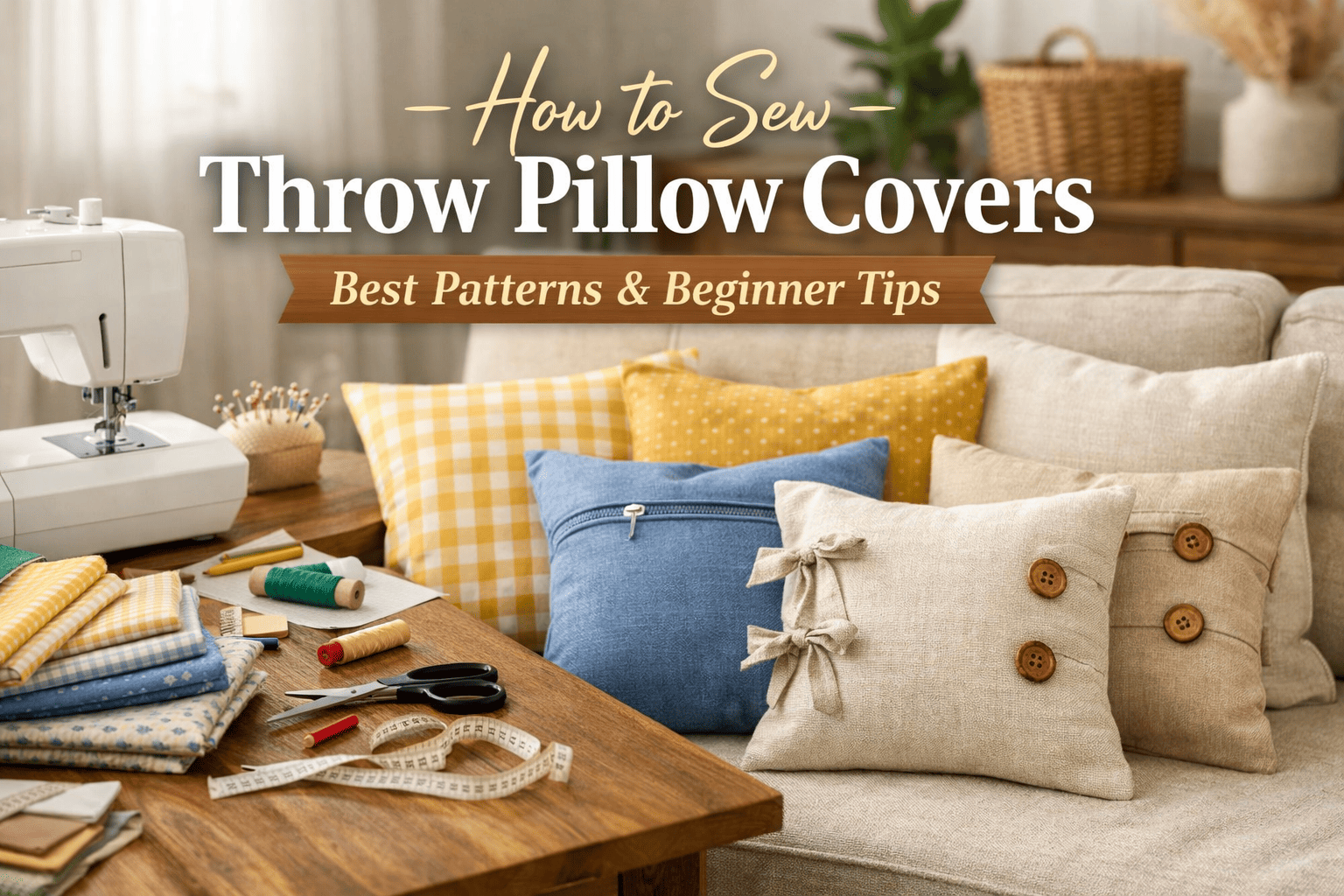

If you’re wondering how to sew throw pillow covers, the good news is this:
it’s one of the easiest and most beginner-friendly sewing projects, even if you’ve never sewn anything before.
With a few basic tools, the right fabric, and simple patterns like envelope or zipper styles, you can create custom throw pillow covers that look store-bought (or better) at a fraction of the cost. This guide walks you through exactly what to do, what to use, and which patterns work best, so you can start sewing confidently from day one.
Why You Should Sew Your Own Throw Pillow Covers
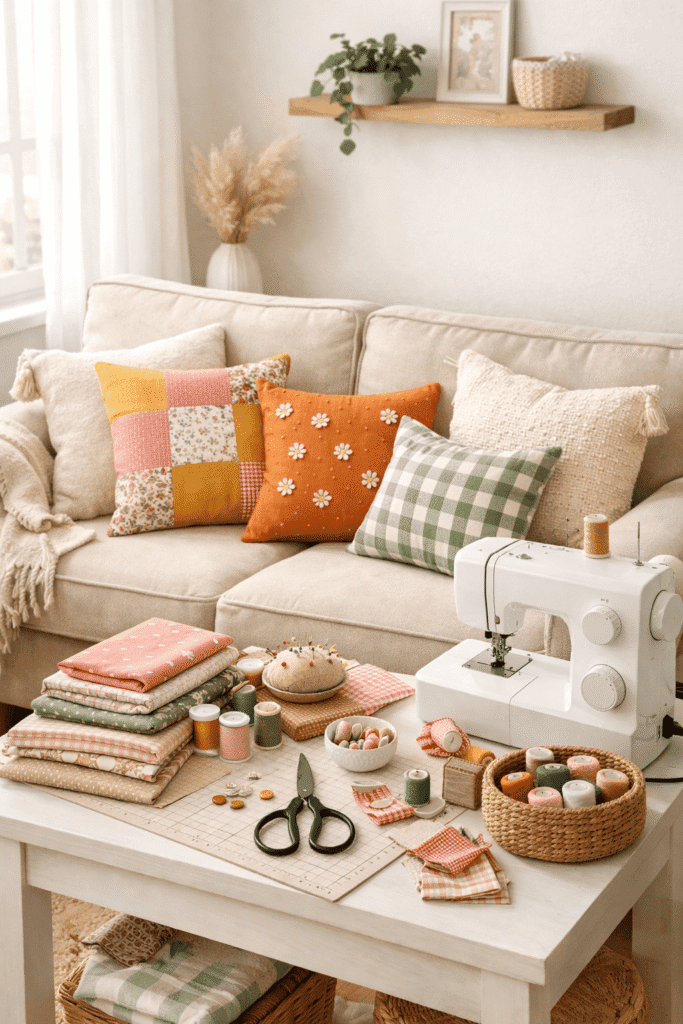
Sewing your own pillow covers isn’t just about saving money it’s about control, creativity, and confidence.
When you make them yourself, you can choose the exact fabric, size, texture, and closure style that fits your home. You’re no longer limited to what stores carry, and you can easily switch covers for seasons, holidays, or mood changes without buying new pillows every time.
It’s also the perfect beginner sewing project because:
- The shapes are simple and forgiving
- You practice straight seams and basic techniques
- Mistakes are easy to fix
- The finished result feels genuinely rewarding
Every pillow you sew builds skills you’ll reuse in future DIY sewing projects.
Essential Supplies for Sewing Throw Pillow Covers
You don’t need a fancy setup to get started. A small collection of basic tools is more than enough to sew professional-looking pillow covers.
A basic sewing machine works perfectly no advanced features required. You’ll also need fabric, a pillow insert, and matching thread. Sharp fabric scissors or a rotary cutter ensure clean edges, while pins or fabric clips keep everything aligned as you sew.
Measuring tools are crucial for accuracy, and an iron is surprisingly important pressing seams makes a massive difference in how polished your pillow looks. Finally, keep a seam ripper nearby. Everyone uses it, and it’s part of the process, not a mistake.
How to Choose the Best Fabric for Throw Pillow Covers
Fabric choice plays a huge role in how your pillow covers look, feel, and last over time.
Best Fabrics for Beginner Sewing Projects
Cotton is the most beginner-friendly option. It’s easy to cut, easy to sew, and available in endless prints and colors. Quilting cotton works well for decorative pillows, while canvas or duck cloth offers more durability.
Linen gives a relaxed, natural, high-end look. It wrinkles more easily but adds beautiful texture and softness to home decor.
Upholstery fabric is thicker and more durable, making it ideal for everyday use. While slightly harder to sew, it creates sturdy pillow covers that hold their shape well.
Velvet and corduroy add luxury and warmth. These fabrics require a bit more patience because of their texture, but the cozy result is worth it.
Outdoor fabric is the best choice for patio or balcony pillows. It’s designed to resist fading, moisture, and mildew.
Fabric Shopping Tips for Beginners
Always pre-wash your fabric before cutting. This prevents shrinkage after sewing. If your fabric has a directional print, buy extra so all pieces face the same way. And don’t forget texture pillow covers are meant to be touched, so comfort matters just as much as appearance
Easy Throw Pillow Cover Patterns for Beginners
You don’t need complicated patterns to get great results. These beginner-friendly pillow cover styles are simple, practical, and stylish.
Envelope Style Throw Pillow Covers
Envelope pillow covers are the easiest option for beginners. Instead of zippers or buttons, they use overlapping fabric panels on the back to hold the pillow insert securely in place.
They’re fast to make, washable, and perfect for beginners who want a clean look without extra steps. This style is ideal for seasonal decor or frequent fabric changes.
Zippered Throw Pillow Covers
Zippered pillow covers create a sleek, tailored finish and keep inserts fully enclosed. While zippers may sound intimidating, basic straight-line zipper installation is very manageable for beginners.
Invisible zippers are popular for a polished look, while exposed zippers can become a stylish design feature. Once you sew one zipper, you’ll realize it’s much easier than it looks.
Tie-Closure Throw Pillow Covers
Tie-closure pillow covers add a soft, rustic charm to your decor. Fabric ties are sewn into the seams and tied into bows to close the pillow.
This style is decorative, forgiving, and beginner-friendly no hardware required. It works especially well for farmhouse, cottage, or cozy interiors.
Button Closure Throw Pillow Covers
Button closures turn functional details into design highlights. They can feel classic, vintage, or modern depending on the fabric and button choice.
If sewing buttonholes feels intimidating, fabric loops or elastic loops are a great alternative. They’re easier to install and still look beautiful.
Beginner Sewing Tips for Perfect Pillow Covers
Before you start sewing, read through all steps so nothing surprises you mid-project. Measure carefully accuracy is what makes DIY look professional.
Press seams as you go. This single habit instantly improves the final appearance. Use plenty of pins to prevent shifting, and sew slowly, especially at corners.
Always test stitches on scrap fabric to adjust tension and stitch length. And most importantly, don’t fear the seam ripper even experienced sewists rely on it.
To improve durability, finish raw edges with a zigzag stitch or serger to prevent fraying, especially if your pillow covers will be washed often.
How to Wash and Care for Handmade Pillow Covers
Caring for your handmade pillow covers keeps them looking new longer. Most cotton and linen covers can be machine washed on a gentle cycle with cold water. Tumble dry on low or air dry to reduce shrinkage
For delicate or textured fabrics, hand washing or spot cleaning is best. Always follow the specific fabric’s care recommendations and iron as needed for a crisp finish.
Final Thoughts Start Sewing Your Own Throw Pillow Covers Today
Sewing throw pillow covers is one of the simplest ways to personalize your home while learning valuable sewing skills. Whether you choose an envelope back, zipper closure, or decorative ties, you’re creating something practical, stylish, and completely your own.
Grab your fabric, take it step by step, and enjoy the process your first pillow cover is just the beginning.
More Easy Sewing Projects for Beginners
- DIY Patchwork Notebook Cover
- Free Cosmetic Bag Sewing Patterns